

-
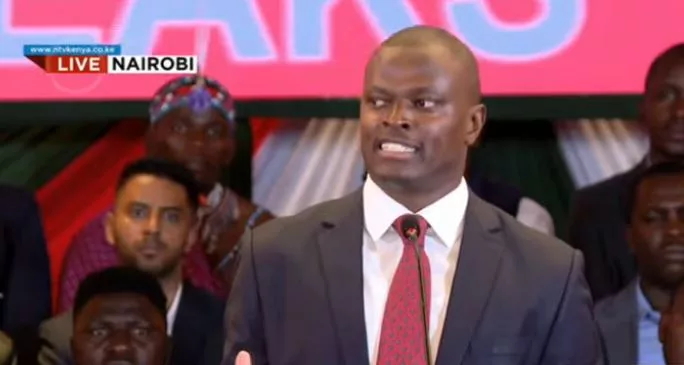 Ndindi Nyoro joins opposition after UDA exit
-
 RONALDO AND GEORGINA FLAUNT WEDDING RINGS
-
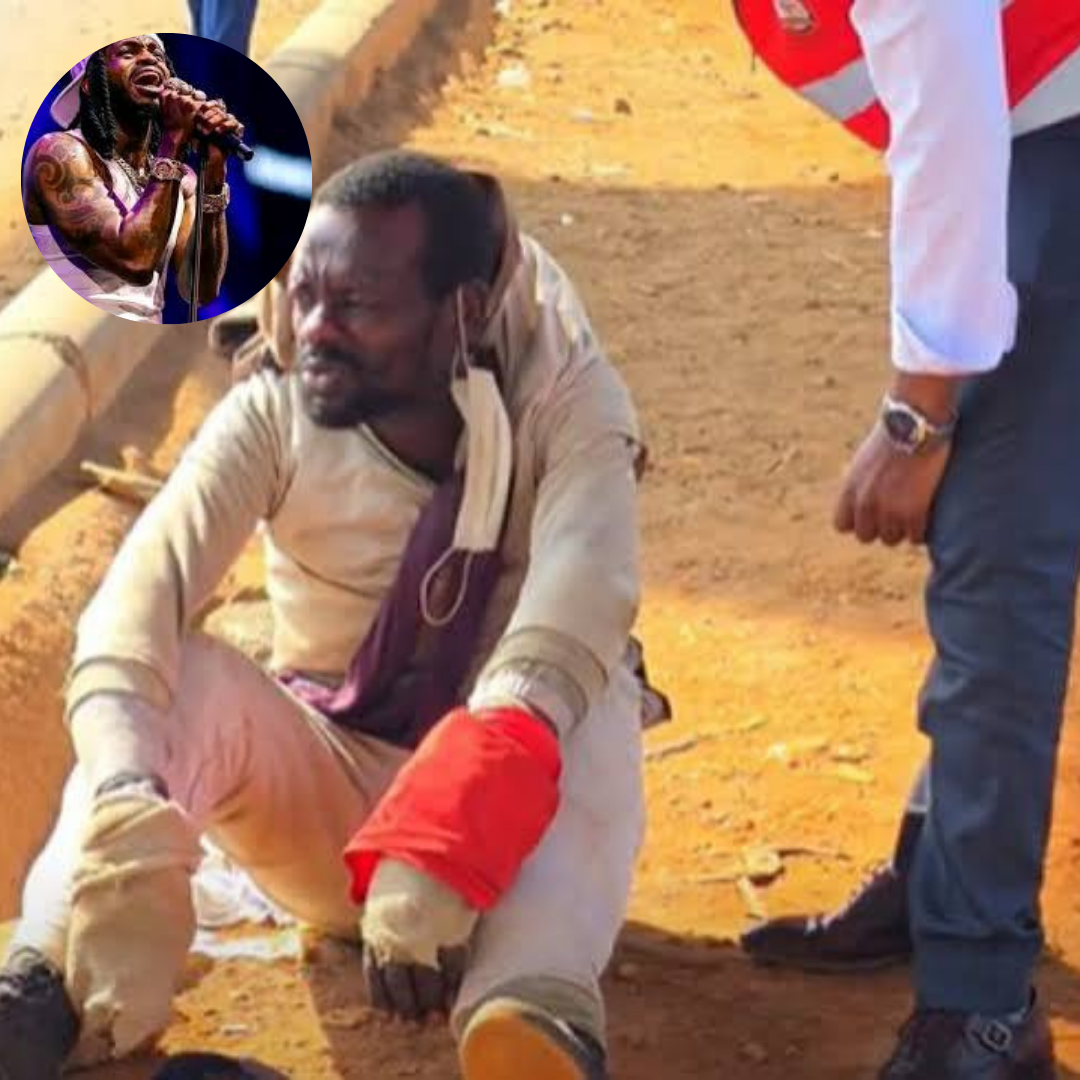 DIAMOND’S FORMER DJ RESCUED FROM STREETS
-
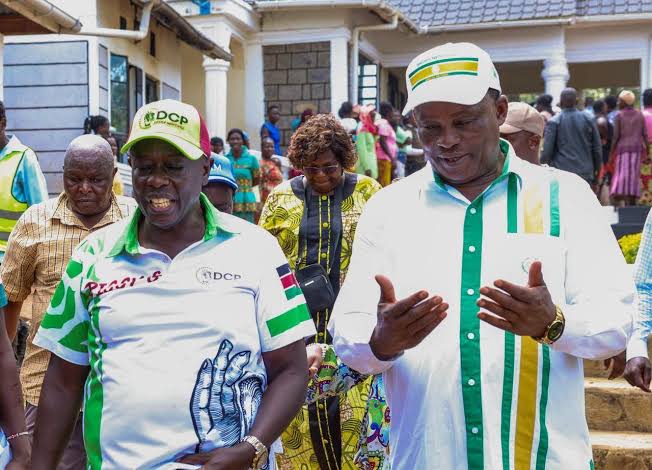 MUTURI REJECTS GACHAGUA’S ‘HYENA COALITION’
-
 YUNGE’S ALLEGED EX CRIES FOUL AFTER CHARLENE’S WEDDING
-
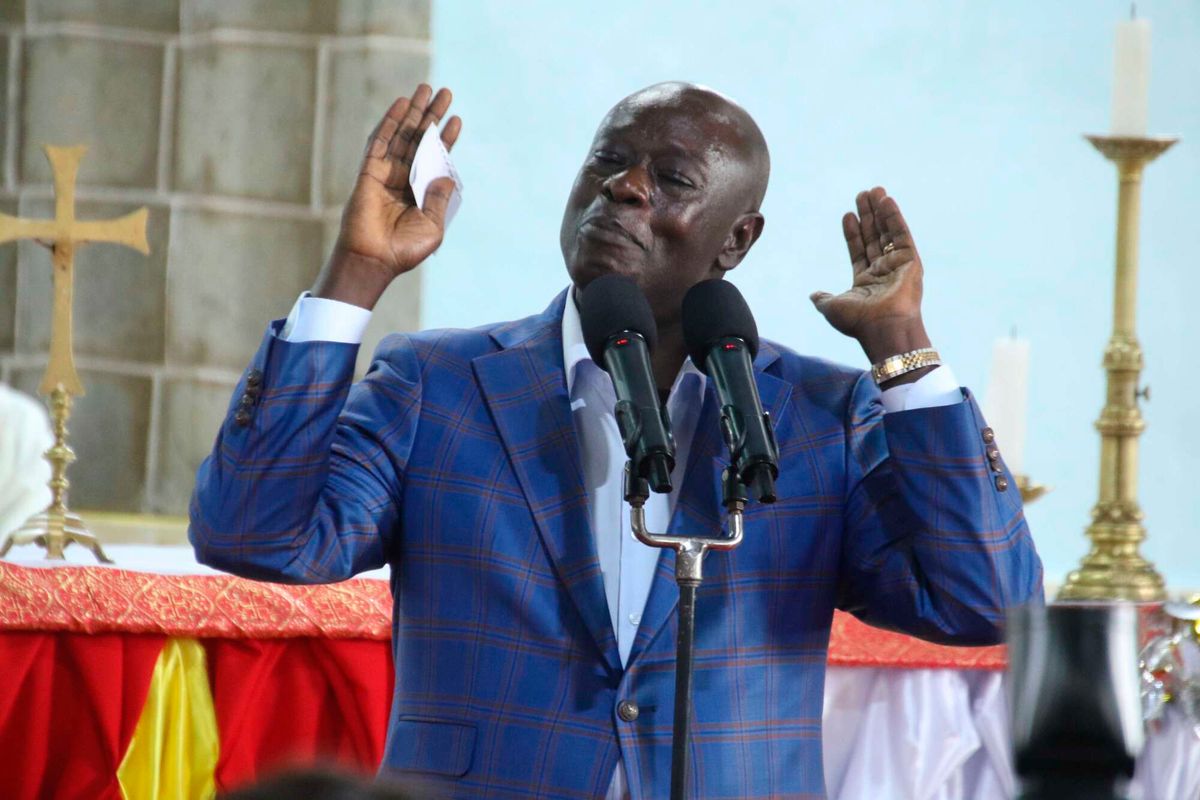 GACHAGUA PROPOSES 'THE HYENA COALITION '
-
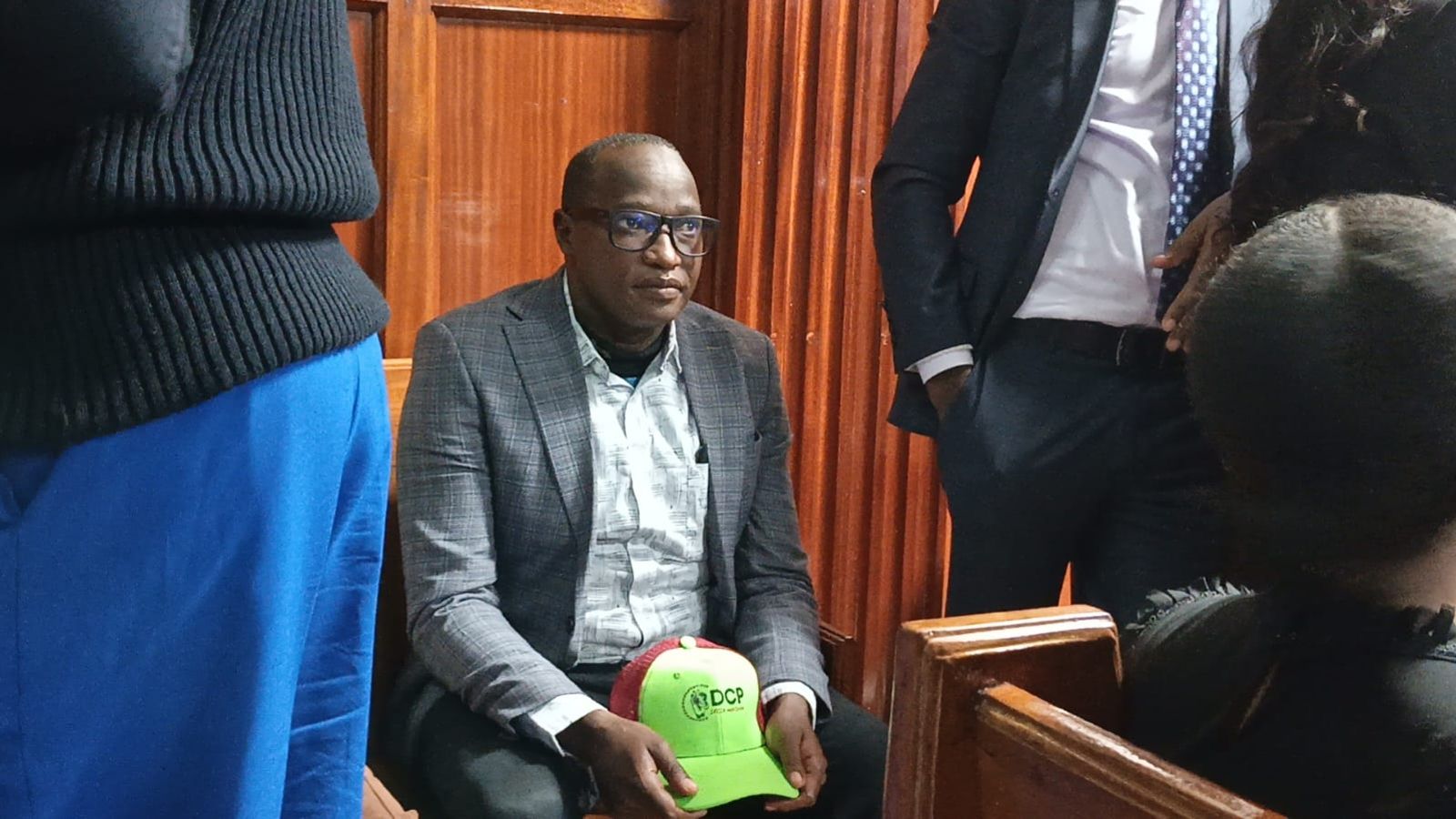 MP KAGUCHIA PLEADS NOT GUILTY TO INCITEMENT CHARGE
-
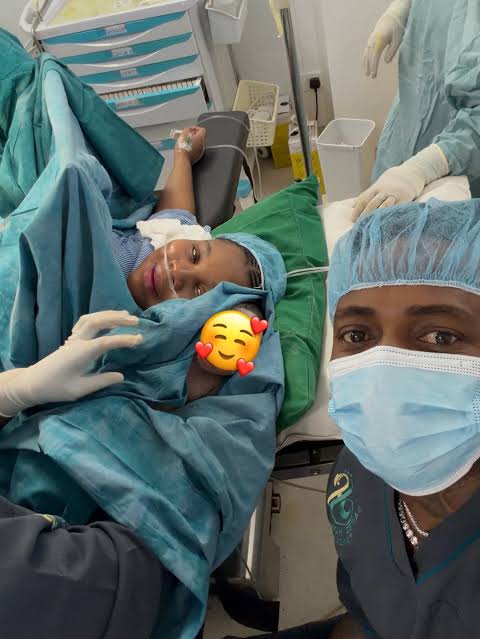 DIAMOND, ZUCHU WELCOME BABY GIRL
-
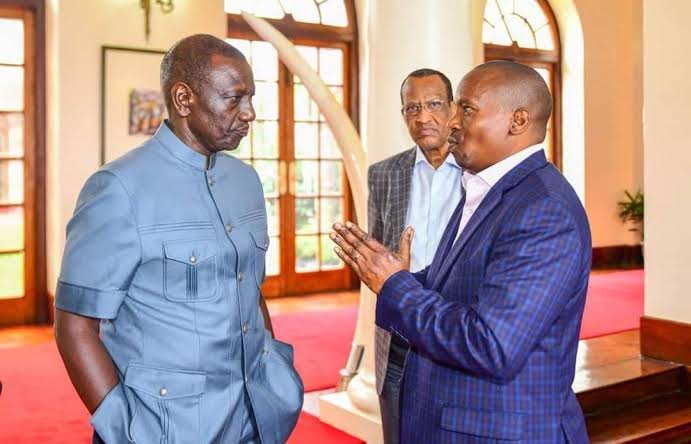 KINDIKI IN TROUBLE ?
GACHAGUA DEMANDS MILLIONS INSTEAD OF REINSTATEMENT AS DP
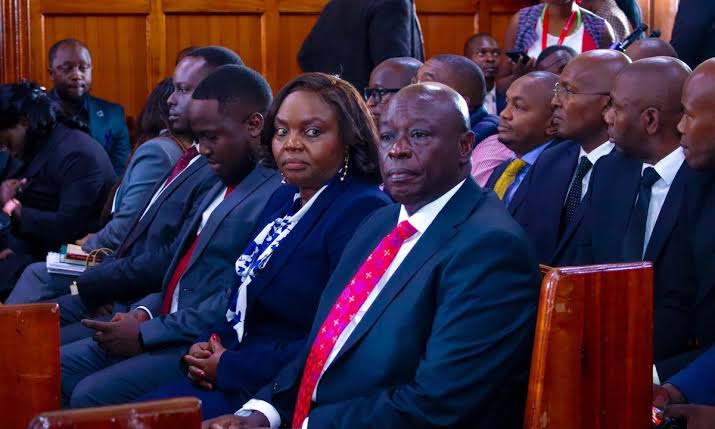
Former Deputy President Rigathi Gachagua has formally abandoned his bid to return to office, shifting focus instead to a multi-million shilling compensation claim in his ongoing legal challenge against his October 2024 impeachment.
The Democracy for Citizens Party (DCP) leader appeared before a three-judge bench at the Milimani Law Courts on Monday, April 27, where his lawyers confirmed that the amended petition no longer seeks reinstatement.
“The petitioner has abandoned the prayer for reinstatement as Deputy President,” the court was told.
The matter is being heard by Justices Eric Ogolla, Anthony Mrima, and Freda Mugambi, who are expected to determine both the legality of the impeachment and the remedies sought.
Gachagua’s legal team, led by senior counsel Paul Muite, told the court that the case now centres on compensation and a declaration that the impeachment process was unconstitutional and procedurally flawed.
According to the lawyers, the former deputy president is seeking payment for salary, damages, and benefits he would have earned had he completed his term.
“The quashing of the unconstitutional impeachment and payment of the remuneration he would have otherwise earned,” the court heard.
At the centre of the claim is a demand exceeding KSh80 million, tied to the 35 months he says he lost following his removal from office.
Court filings show that:
He is seeking about KSh42 million in unpaid salary, based on a monthly pay of KSh1.2 million,
KSh22.8 million in gratuity, calculated at 31 per cent of his salary,
KSh700,000 in airtime allowance, estimated at KSh20,000 per month over the same period.
He is also claiming medical cover and official transport allowances for the full duration.
He is also seeking a monthly pension of about KSh980,000—equivalent to 80 per cent of his last salary—as well as a lump-sum payment of roughly KSh14 million, equivalent to one year’s pay.
His demands extend further to include state-provided privileges such as:
Two official vehicles, to be replaced every four years,
A monthly fuel allowance of KSh180,000,
Full medical cover both locally and abroad,
Staff support including drivers, cooks, cleaners, and a personal assistant,
Armed security,
Diplomatic passports for himself and his spouse,
VIP access to airport lounges across the country.
Impeachment Process Under Legal Challenge.
At the core of the petition is Gachagua’s argument that his removal from office did not meet constitutional standards.
His legal team maintains that the process was unconstitutional, irregular, and failed to meet the threshold required for public participation.
They argue that members of the public were presented with allegations without sufficient facts to form informed opinions, undermining the integrity of the process.
Muite also challenged the substance of the impeachment motion:
“The allegations and evidence in the impeachment motion at the National Assembly simply did not meet the constitutional threshold of Article 145 (1). They must expressly state that the alleged violation is gross and give particulars of the alleged gross violations.”
He added: “Whatever is alleged must be serious, substantial and weighty… The allegations were vague, lacking in detail and wholly unfounded.”
The defence further criticised how the proceedings were conducted, describing them as rushed and designed to avoid scrutiny.
According to the legal team, Parliament fast-tracked the process—at times sitting into unofficial hours—making it difficult for Gachagua to adequately prepare his defence.
They also told the court that the Senate proceeded with the impeachment despite his illness at a critical stage.
“On the day he was supposed to defend himself, he fell ill. The Senate went ahead to impeach him by approving 5 out of 11 charges. There was absolutely no attempt by the National Assembly and the Senate to apply their minds to the gross violation of the constitution,” Muite said.
The team also faulted the Senate for rejecting a request for adjournment, saying no valid reason was provided.
Gachagua, who became the first deputy president in Kenya’s history to be impeached, has consistently maintained that his removal was politically driven and lacked a proper legal foundation.
Further hearings in the matter are scheduled for May 7 and May 8.
As the case moves forward, the court’s ruling is expected to carry significant constitutional weight, shaping how future impeachments are conducted under the Constitution of Kenya 2010.
If the High Court finds that the impeachment was unconstitutional, the effect would be far-reaching. Legally, the removal would be treated as invalid from the outset—as though it should not have happened.
In that event, the court may grant remedies such as compensation for lost salary, benefits, and damages, alongside declarations that Parliament violated the Constitution and orders restoring rights attached to the office.
Reinstatement, while possible in law, would not be automatic. The court would have to consider whether such an order would create a constitutional conflict, particularly given that Kithure Kindiki is already serving as Deputy President. In practice, courts often avoid disrupting an already occupied office, making compensation a more likely outcome.
A nullification would also set a strong precedent—tightening the legal threshold for impeachment, limiting Parliament’s discretion, and strengthening judicial oversight over political processes.
If, however, the court upholds the impeachment as constitutional, then Gachagua’s removal would remain valid and final. His claim to the office would effectively be extinguished, and his demands for salary, allowances, and benefits tied to the remainder of his term would likely not succeed.
Questions around retirement benefits could still arise, as the law does not provide a definitive position on whether an impeached officeholder is entitled to full post-service privileges. This would depend on how the relevant statutes are interpreted.
Such a ruling would ultimately affirm the authority of Parliament in carrying out impeachment, reinforcing its constitutional mandate as long as due process is followed.
Moreover, the broader implications could extend to Gachagua’s political future, as an upheld impeachment may expose him to legal and constitutional restrictions that could limit his ability to contest or hold public office for a period of time—an outcome that would significantly affect any ambitions tied to his 2027 presidential race.
Comments (0)
No comments yet. Be the first to comment!