

-
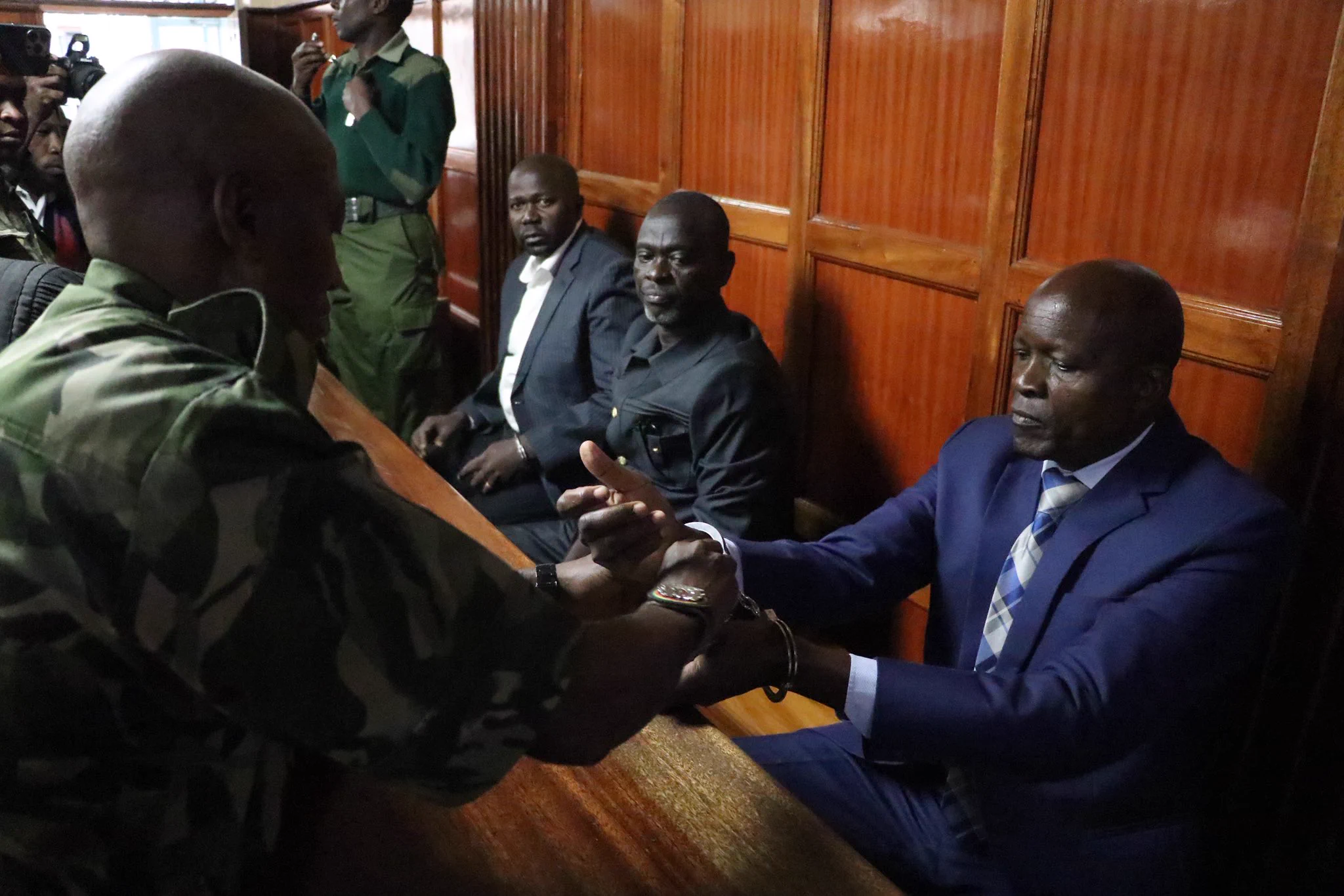 OBADO HANDED 25-YEAR JAIL TERM
-
 PARLIAMENT PHONE THEFT SCANDAL SPARKS ROW
-
 EBOLA RUMOURS TRAIL USHINDI'S DEATH
-
 KIONI PARTS WAYS WITH JUBILEE
-
 PETE EDOCHIE DIES AT 79
-
 SENEGAL RECLAIMS AFCON TITLE.
-
 NO TOUCH, NO LONG SPEECH, KARUA DOUBLE SNUBS MOSIRIA
-
 KANYARI JOINS GACHAGUA'S DCP
-
 BAHATI'S BATON PASS OR DIANA B'S BLUEPRINT?
OBADO HANDED 25-YEAR JAIL TERM
Former Migori Governor Okoth Obado has been sentenced to 25 years in prison for the murder of former Rongo University student Sharon Otieno, bringing an end to the sentencing phase of a case that has dragged through the courts for more than eight years.
High Court Judge Cecilia Githua on Friday, November 27, 2026, handed Obado the 25-year jail term, with his former personal assistant Michael Juma Oyamo receiving a similar sentence. Former Migori County Clerk Caspal Ajwang Obiero was sentenced to 18 years in prison.
The three were convicted on July 23, 2026, after the court found that the prosecution had proved their involvement in Sharon's murder beyond reasonable doubt.
In her sentencing decision, Justice Githua said the aggravating circumstances surrounding the killing outweighed the mitigating factors presented by the convicts, noting that the crime involved planning, coordination and the execution of a common criminal plan.
"The evidence established that the offence involved planning, coordination and participation of the offenders, each playing a distinct role in facilitating the execution of a common design to kill the deceased," she said.
The judge identified Obado as the architect of the plot, finding that he supplied the motive, instigated the killing and provided financial resources to facilitate the criminal undertaking.
"The first accused's (Obado) culpability must be assessed against the finding that he supplied the motive, instigated the killing and provided the financial resources to facilitate the execution of the criminal enterprise," she said.
Justice Githua said Obado's position in the case was central, considering his relationship with Sharon, who was 26 years old and seven months pregnant at the time of her death in September 2018.
The court also found Oyamo instrumental in facilitating the murder plan, while Obiero was found to have provided logistical support, including allowing planning meetings at his residence and helping conceal evidence after the killing.
The sentencing followed a mitigation hearing in September during which Sharon's parents appealed for a non-custodial sentence for Obado, citing reconciliation efforts and the financial assistance he had reportedly extended to the family.
They asked the court to allow him to remain free so he could continue supporting Sharon's three surviving children and fulfil promises made to the family, including financial and property commitments.
However, Justice Githua maintained that reconciliation and financial assistance could not override the court's responsibility to administer justice, warning against a precedent in which convicted persons could use financial support to secure leniency for serious offences.
"I have considered all submissions made. I note that the victim's family have placed considerable emphasis on leniency so that financial assistance can continue being given to Sharon’s children. While I commend the victim's family's efforts towards reconciliation, it cannot displace the court’s mandate," she stated.
The judge further cautioned against a justice system in which financial dependence could influence punishment, potentially disadvantaging victims from vulnerable backgrounds.
The prosecution had sought the death penalty, while Obado's defence requested a non-custodial sentence, citing his age, health, remorse, first-offender status and willingness to support Sharon's children.
Justice Githua declined both requests, ruling that a custodial sentence was appropriate for the three convicts. She also declined to order compensation or restitution to Sharon's family, citing insufficient evidence to establish the extent of their losses.
Sharon was killed in September 2018 after she was reportedly lured to a meeting in Rongo. She was accompanied by Nation journalist Barrack Oduor, who survived the incident and later testified in court.
The killing triggered a high-profile investigation that led to the arrest and prosecution of Obado, Oyamo and Obiero, with the case subsequently heard at the Milimani High Court in Nairobi.
The prosecution called 42 witnesses and relied on circumstantial evidence, witness testimony, forensic findings, mobile phone records and evidence relating to the movements and communications of the accused persons.
In July 2026, Justice Githua found the trio guilty of murder under Section 203 of the Penal Code, ruling that the evidence established malice aforethought and their involvement in the killing.
The three were also acquitted of a separate charge relating to the death of Sharon's unborn child.
The judge directed that the prison terms be calculated with consideration for the periods the three had already spent in lawful custody, including time spent awaiting sentencing following their conviction.
The sentencing comes amid wider national conversations about femicide, accountability and the prolonged pursuit of justice for victims of gender-based violence.
Sharon's case has remained a prominent reference point in discussions on violence against women, the vulnerability of young women and the need for faster handling of gender-based violence cases.
The three convicts retain the right to challenge their convictions and sentences through the appellate process.



Comments (0)
No comments yet. Be the first to comment!