

-
 GACHAGUA ROARS 'DON'T LECTURE ME!' AT 'LAZY' MUTURI, MATIANG'I
-
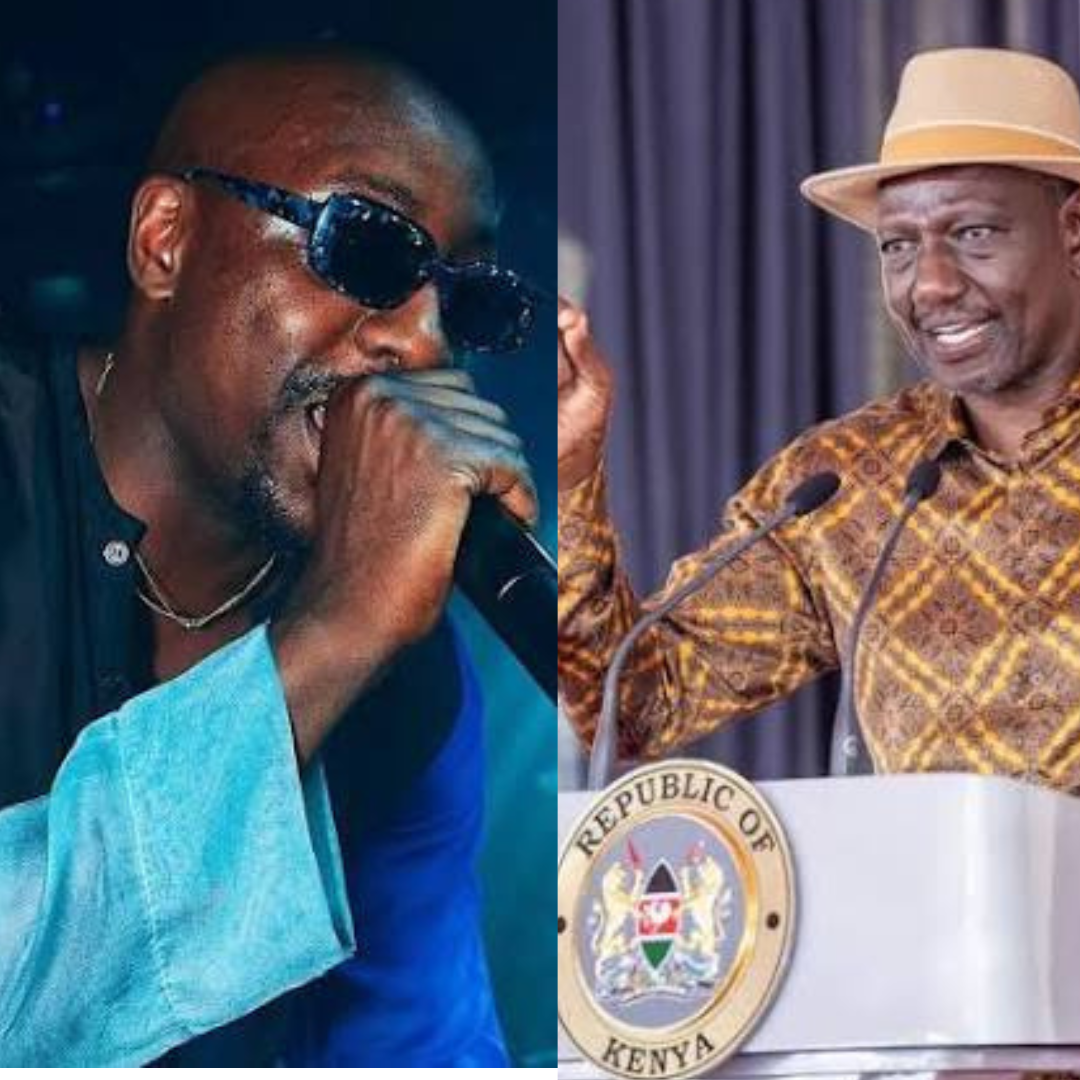 BIEN FAULTS RUTO'S PRIORITIES OVER BAYERN SHOWCASE
-
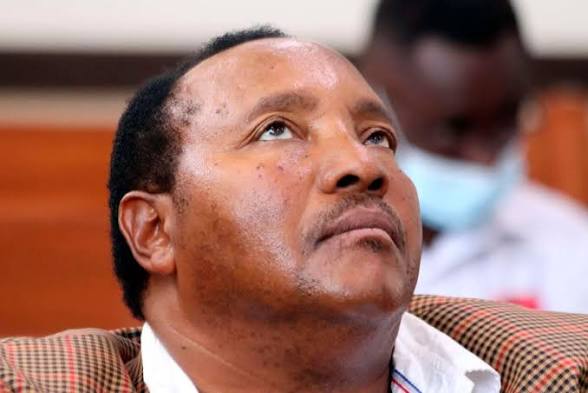 WAITITU HANDED 13-YEAR JAIL TERM
-
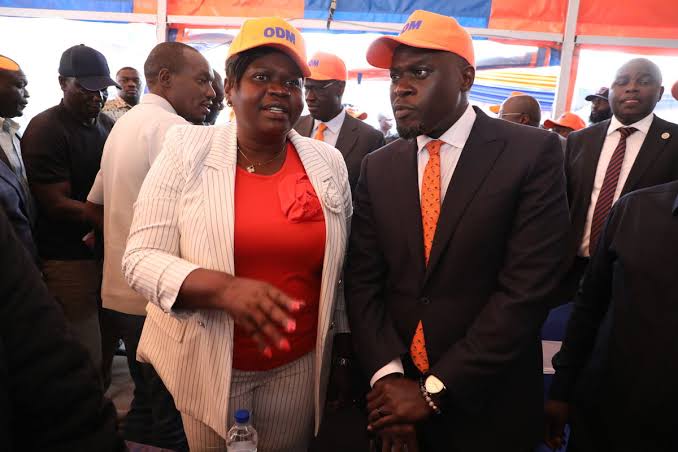 SAKAJA DUMPS UDA FOR ODM
-
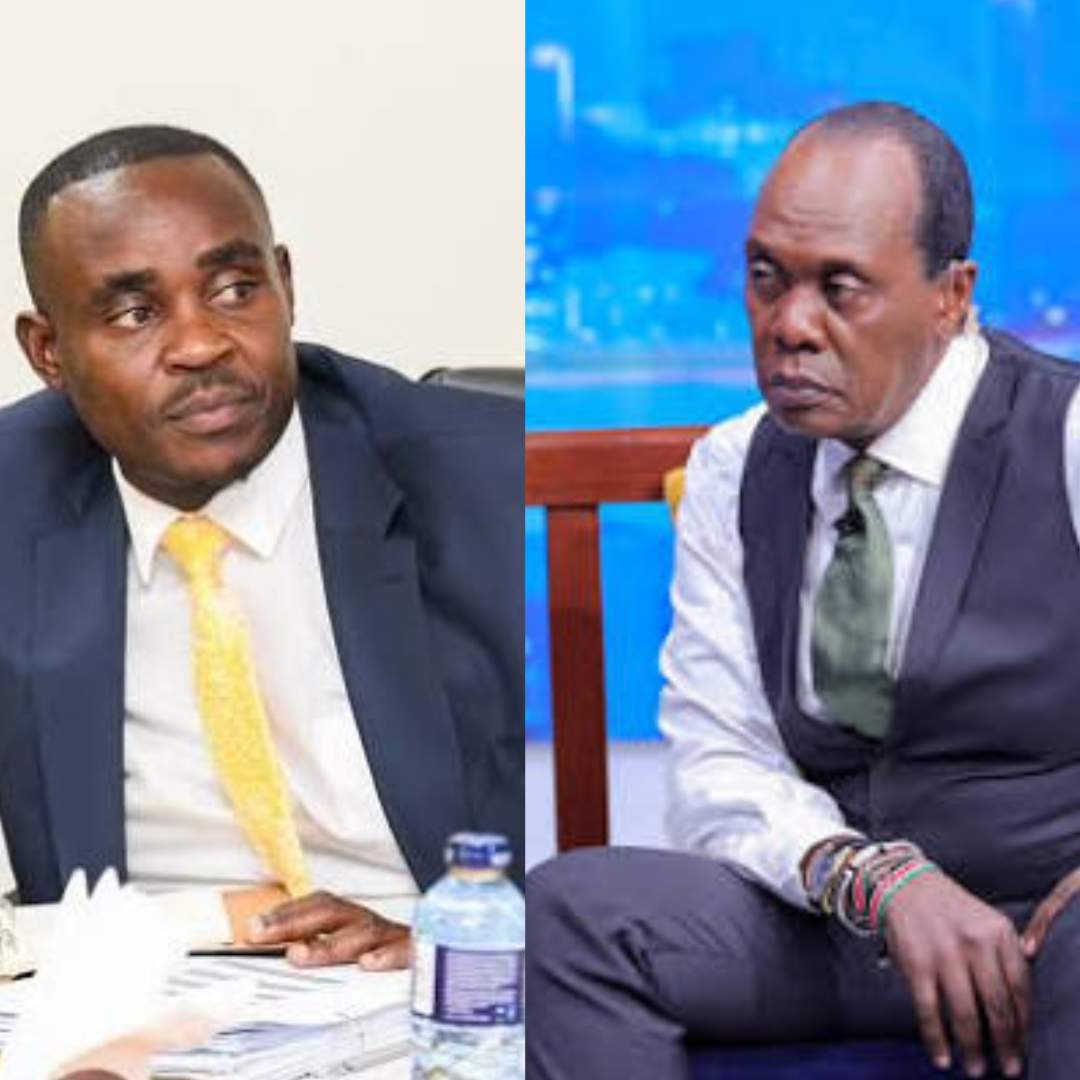 MALALA, JEFF TRADE PERSONAL JABS IN LIVE TV CLASH
-
 KENYAN PRINCE PICKS FIGHT WITH THE US GOVERNMENT AFTER SCAM ALLEGATIONS
-
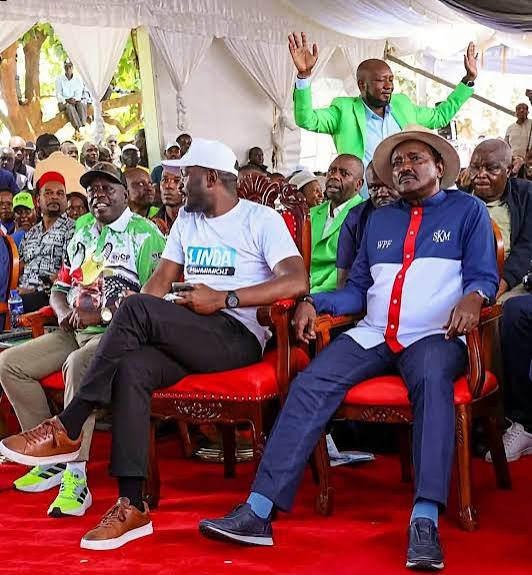 KALONZO SIDELINED ? OPTS EXIT AMID LMM LAUNCH HECKLING
-
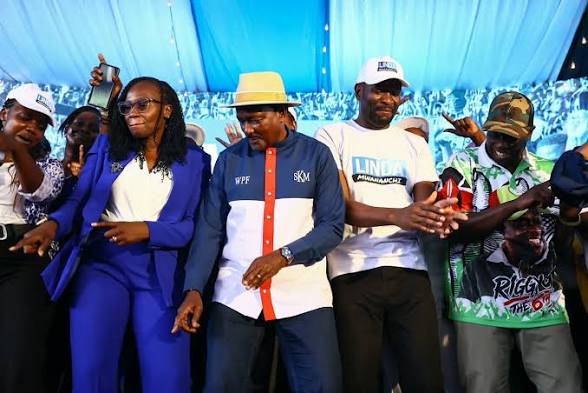 LINDA MWANANCHI LAUNCH JOLTS KENYA'S POLITICAL LANDSCAPE
-
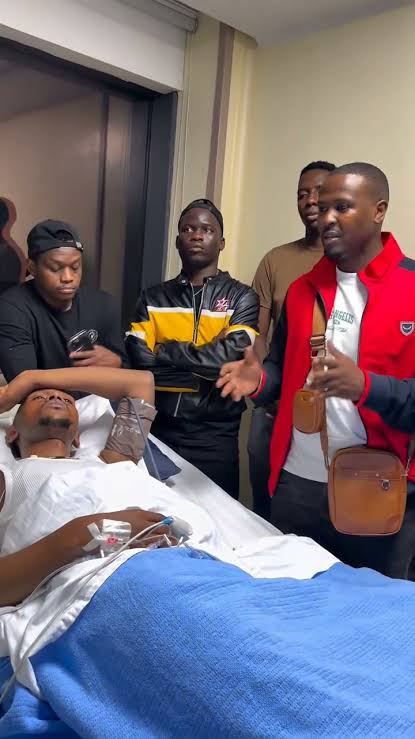 MOSIRIA HOSPITALISED AFTER ALLEGED FOOD POISONING
GACHAGUA ROARS 'DON'T LECTURE ME!' AT 'LAZY' MUTURI, MATIANG'I
Former Deputy President Rigathi Gachagua has turned his guns on fellow United Opposition leaders, accusing them of political laziness, poor grassroots mobilisation and spending too much time in boardrooms instead of building the numbers needed to defeat President William Ruto in the 2027 General Election.
Speaking at his Wamunyoro residence in Nyeri on Tuesday, November 3, 2026, the Democracy for the Citizens Party (DCP) leader launched a scathing response to criticism from former Attorney General Justin Muturi and former Interior Cabinet Secretary Fred Matiang’i, who had questioned his approach to opposition politics, accusing him of arrogance, political bullying and promoting ethnic divisions.
Gachagua dismissed the accusations, insisting that his outspoken approach was driven by the urgency of mobilising voters rather than a desire to intimidate his political partners.
"It seems that many of my colleagues in the opposition are not understanding me. I am not arrogant or a bully. What I am doing is mobilising numbers that will send Ruto home, so instead of attacking me, they should go out and mobilise," Gachagua said.
He questioned why some opposition leaders appeared more interested in confronting him than challenging the President, claiming that their political activities had not matched the seriousness required to mount a successful presidential campaign.
“I want to tell my colleagues in the Opposition to be serious. Let us work and stop criticising others. I was away for two months; you were not fighting Ruto. When I am back, you are now fighting me instead of Ruto,” he said.
The former Deputy President maintained that political manifestos, ideologies and public declarations would amount to little without an organised voter base, arguing that winning State House would ultimately depend on electoral numbers.
"Even if we have the best ideologies or manifestos, we cannot drive Ruto away. Currently, you have seen him looking for numbers even in his backyard. He is trying to balance his numbers. My advice to those victimising me is that you will not drive him away through press conferences or in the comfort of your homes. Move out and seek votes," he added.
He further took aim at opposition presidential hopefuls whom he accused of relying on television interviews, hotel meetings and press conferences instead of engaging voters directly.
"There is no way I will leave this seat to someone who is a lazy mobiliser or one who seeks votes through TVs and press conferences. Political science is about numbers, period," he declared.
Gachagua also warned that he would not mobilise supporters across the country only to hand them over to a presidential candidate unwilling to undertake the demanding work of campaigning.
He insisted that whoever eventually carries the opposition presidential ticket must demonstrate commitment, hard work and the ability to connect with voters across the country.
“We cannot give this country to a lazy person because there is too much work to be done. You must show us that you are a person who works hard,” he said.
In a further show of defiance, Gachagua demanded respect from his fellow opposition leaders, reminding them of his political contribution to the rise of several leaders, including President Ruto.
“Na mimi mtu asiniongeleshe kama mtoto yake. I delivered the presidency of William Ruto; we will deliver this, but people should have some respect,” he stated.
He defended his mobilisation record, saying his DCP party had maintained its political activities even during his two-month absence in the United States.
According to Gachagua, the party had conducted 27 political rallies since his departure, questioning whether other leaders seeking the presidency within the opposition could demonstrate a similar level of grassroots engagement.
He also challenged Muturi's political influence by citing the Mbeere North by-election, where he claimed the Democratic Party candidate secured only 35 votes against more than 200 garnered by the candidate backed by President Ruto.
Gachagua contrasted the figures with the Ol Kalou by-election, where he claimed the DCP candidate performed better than the government-backed contender, using the results to defend his party's growing electoral influence.
The former Deputy President also maintained that political negotiations should be guided by demonstrable regional support, rather than what he described as political ambitions unsupported by actual votes.
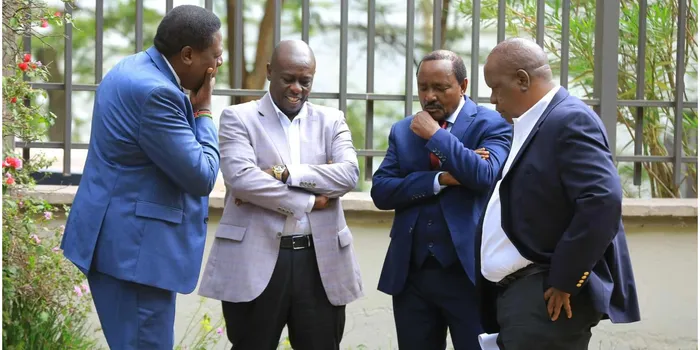
The latest confrontation follows a series of public exchanges between Gachagua and other opposition figures over the proposed tripartite political arrangement involving his DCP, Kalonzo Musyoka's Wiper Party and the Linda Mwananchi faction associated with Nairobi Senator Edwin Sifuna.
Gachagua has argued that the proposed alliance could bring together substantial voting blocs from Mt Kenya, Western Kenya and Ukambani, which he believes could provide the opposition with the numbers required to cross the constitutional threshold of 50 per cent plus one.
Under his proposed arrangement, Gachagua would mobilise Mt Kenya and Maasai votes, which he estimates at 35 per cent of the national electorate, while Sifuna and Kalonzo would help consolidate support in Western Kenya and Ukambani, respectively.
However, the proposal has attracted criticism from Muturi and Matiang’i, who argue that the presidency cannot be secured through regional voting calculations alone.
During a November 1 interview with NTV, Matiang’i cautioned that excessive reliance on ethnic numbers and what he termed majoritarian arrogance could fracture the opposition before the 2027 contest.
“That majoritarian arrogance and that particular pride is precisely what is going to split the opposition and make it very difficult for the opposition to come together. The leadership and future of our country is not to be decided on ethnic balkanisation. I thought that this was a competition of ideas, platforms, track records, competence and qualifications,” Matiang’i said.
Muturi subsequently issued a statement on November 2 accusing Gachagua of political bullying, double-speak and placing personal political calculations above the broader objective of building a united opposition.
He rejected the suggestion that any single community could independently determine who becomes president, insisting that national leadership required broader partnerships and mutual respect.
“Let it be clear: No individual owns the United Opposition, and no community has a monopoly on Kenya’s presidency. Political partnerships must be built on mutual respect, not ultimatums, political bullying or supremacy contests,” Muturi stated.
He also questioned whether Gachagua's proposed political arrangement was genuinely intended to secure State House or position him and his allies for negotiations over government positions after the election.
Jubilee Party Secretary General Jeremiah Kioni and other party figures have also criticised Gachagua's conduct, accusing him of undermining opposition unity by dismissing smaller political parties and treating coalition partners as subordinate players.
Kioni particularly took issue with Gachagua's alleged references to some opposition figures as moles, arguing that such remarks were disrespectful to the party and its presidential candidate, Matiang’i.
Despite the escalating exchanges, Gachagua maintained that his disagreements with fellow opposition leaders should not be mistaken for opposition disunity, insisting that political competition and eventual cooperation could coexist.
He also invoked the 2002 political realignment that brought former President Mwai Kibaki to power, expressing confidence that opposition leaders would eventually put their differences aside and settle on a single candidate capable of defeating Ruto.
Notably, Gachagua spared Sifuna from his criticism, instead presenting the Nairobi Senator as an example of a leader willing to engage in practical grassroots mobilisation.
Recalling Sifuna's October 20 visit to his Wamunyoro residence, Gachagua said the two immediately held discussions about the numbers required to defeat the President and agreed on an ambitious mobilisation target.
"I told Sifuna to come so that we could discuss numbers... We sat under these trees, talked about numbers, and settled on four to five million \[votes\]. We told him to go and work towards those five million."
He further reiterated his willingness to support Sifuna, even as his running mate, should political calculations establish that the senator stood the strongest chance of defeating Ruto.
"If we do our arithmetic and find that Sifuna ndiye atapeleka hii mtu nyumbani mapema \[is the one to send this man home early\], so be it... Even I, Riggy G, I can deputize Sifuna."
Beyond the national political contest, Gachagua also used the Nyeri address to reassert his influence in Mt Kenya politics, promising to spearhead efforts to remove local leaders he accused of betraying the region's political interests.
He apologised for previous electoral choices and pledged to support better leadership across Nyeri's elective positions, invoking the legacy of former President Mwai Kibaki and independence hero Dedan Kimathi.
The address came as divisions within the United Opposition continue to expose competing presidential ambitions, disagreements over coalition leadership and differing strategies for challenging Ruto in 2027.
Comments (0)
No comments yet. Be the first to comment!