

-
 MORE KENYANS DIE IN RUSSIA - UKRAINE WAR
-
 LIFE SENTENCE FOR TRUMP'S ASSASSINATION PLOTTER ; MAKES BIZZARE PUTIN AND HITLER COMMENTS
-
 GOVERNMENT HAND IN KOKO'S COLLAPSE
-
 MUHONZI SPARKS US - UGANDA DIPLOMATIC ROW
-
 CARRICK CALLS FOR HUMILITY AFTER MAN U VICTORY
-
 Kenya Hosts Continental Gathering to Shape Unified African Pastoralist Agenda
-
 GACHAGUA ALLEGEDLY MISSING AFTER CHURCH ATTACK
-
 MADOWO AND MUHOONZI ONLINE BATTLE
-
 WHERE IS BOBI WINE ?
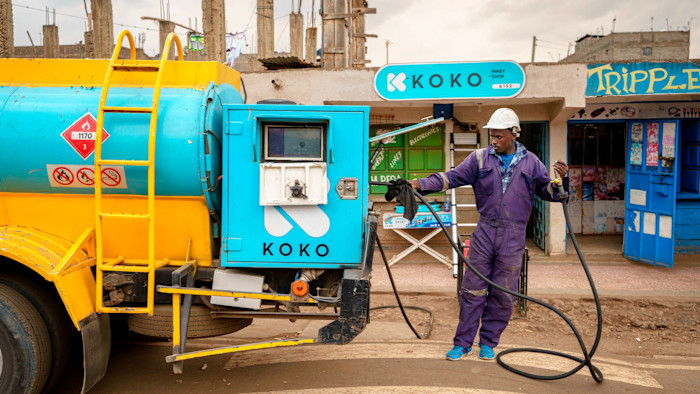
GOVERNMENT HAND IN KOKO'S COLLAPSE
KOKO Networks, once held up as a flagship of Kenya’s clean-cooking transition, has shut down its operations after a prolonged standoff with the government over carbon credit approvals—an impasse that ultimately dismantled the financial foundation of its business.
The Nairobi-based startup, which supplied subsidised bioethanol fuel and cookstoves to low-income households, confirmed the closure to staff late last week, sending home more than 700 employees and halting services to an estimated 1.5 million households.
Thousands of agents linked to its nationwide distribution network were also affected.
At the centre of KOKO’s collapse lies a regulatory decision by the Kenyan government to withhold a Letter of Authorisation required for the international sale of carbon credits generated by the company’s operations. Without that approval, KOKO was legally barred from monetising the emissions reductions that underpinned its subsidy-driven model.
According to people familiar with internal discussions, company executives concluded that without access to carbon revenues, KOKO could no longer sustain operations or meet its financial obligations.
Founded in 2013, KOKO built a nationwide network of more than 3,000 automated fuel dispensing machines, allowing urban and peri-urban households to purchase bioethanol at roughly half the market price. The affordability of both fuel and proprietary cookstoves depended almost entirely on income from carbon credits sold to overseas buyers.
Those credits were generated through measurable reductions in carbon dioxide, methane and black carbon emissions as households shifted away from charcoal and kerosene—fuels long associated with deforestation and severe indoor air pollution.
But as authorisation delays stretched on, carbon revenues stalled. The company struggled to bridge the widening gap between consumer prices and supply-chain costs. With cash flow deteriorating, lenders tightened their grip on company assets, and KOKO accumulated debts estimated at more than US$60 million.
The collapse came less than a year after the World Bank Group’s Multilateral Investment Guarantee Agency issued a political risk guarantee of nearly US$180 million to support KOKO’s expansion and protect against government interference. At the time, the company projected it would reach an additional three million customers by 2027.
Reports indicate the company may pursue compensation under the guarantee, alleging breach of contract.
As public concern mounted, President William Ruto’s economic adviser David Ndii acknowledged that policy and regulatory factors played a role in the company’s failure, describing the situation as complex.
“Koko’s case is uniquely multidimensional. The Paris Agreement itself, the veracity of cookstove carbon credits, our investor unfriendly NDC regime and carbon market regulations, transparency of Koko’s business model, diplomatic meddling,” Ndii said.
Asked whether the state could still intervene to protect jobs and households reliant on KOKO’s fuel, Ndii responded: “Too late. Even good doctors lose patients.”
His remarks reinforced the government’s position that the shutdown reflected structural constraints rather than a single administrative action.
Even as KOKO’s clean-cooking model collapsed under regulatory pressure, the government has accelerated support for an alternative energy pathway centred on liquefied petroleum gas (LPG).
Construction of the Taifa Gas LPG storage and distribution facility in Mombasa has reached 80 per cent completion. The project, launched in 2023, is expected to be commissioned by President William Ruto in March 2026 and has been positioned as a key intervention following KOKO’s exit.
Taifa Gas, a Tanzanian firm owned by businessman Rostam Aziz, was licensed in 2022 to establish LPG storage facilities at Dongo Kundu near the Port of Mombasa. Once operational, the plant will add 30,000 metric tonnes of storage—nearly doubling Kenya’s current LPG capacity of about 35,000 metric tonnes.
Investment Promotion Principal Secretary Abubakar Hassan said limited storage capacity has been a major driver of LPG shortages and price volatility.
“This project, which provides a storage facility of 30,000 metric tonnes, will greatly reduce the price of LPG gas to Kenyans,” Hassan said.
Taifa Gas site manager Antony Musyoka confirmed that the project has benefited from direct government support, including land allocation within the Dongo Kundu Special Economic Zone.
“Through the support of the government, we have been able to develop the 30 acres that have been awarded to develop an LPG facility that will be responsible for both storage and distribution,” Musyoka said.
The contrast between KOKO’s regulatory deadlock and Taifa Gas’ accelerated rollout has sharpened debate over Kenya’s clean-energy direction. While LPG burns cleaner than charcoal, it remains a fossil fuel, unlike bioethanol, which KOKO promoted as a renewable alternative aligned with emissions-reduction commitments.
Government officials argue LPG expansion is necessary to stabilise supply and prices as demand rises. The Taifa Gas facility is also part of the wider Dongo Kundu Special Economic Zone, which authorities say has attracted interest from nearly 100 investors and created more than 100 jobs so far.
Yet energy analysts say KOKO’s collapse illustrates how climate startups reliant on carbon markets remain vulnerable to regulatory uncertainty.
For households, the immediate concern is access and affordability. Many former KOKO customers may now be forced back to charcoal or kerosene—fuels that are more polluting and often more expensive in the long run.
For investors, the episode has raised fresh questions about policy risk in Kenya’s climate sector, despite the country’s ambition to lead on climate action.
KOKO’s rise and fall now stand as a stark reminder that climate innovation, however well funded or socially impactful, can unravel when regulation, finance and policy alignment fail to move in step.
Following KOKO’s shutdown, public reaction online reflected growing frustration over the government’s handling of the clean-cooking firm, with many netizens questioning why an innovation credited with improving household energy access was allowed to collapse. Some commentators attributed the outcome to governance failures, including allegations of corruption, while others called for greater transparency around the regulatory decisions that led to the shutdown.


Comments (0)
No comments yet. Be the first to comment!