

-
 Karura race draws more than 1,000 runners ahead of Nairobi Marathon
-
 ZELENSKYY FLAGS KENYA TO UN OVER RUSSIA WAR RECRUITMENT
-
 IRAN-US LOCK HORNS AT UNGA
-
 UHURU BACK ON 2027 POLITICAL FRONTLINE AFTER COURT RULING
-
 KAIKAI DISPUTES OMBIJA’S CLAIM GACHAGUA SOUGHT HIS SACKING
-
 NOLLYWOOD ICON OLU JACOB DIES AT 84
-
 VAR OFFICIALS PUNISHED FOR HAALAND'S CONTROVERSIAL GOAL
-
 'FAKE JOMO ' DECLARES 2027 PRESIDENTIAL BID
-
 DIAMOND AND ZUCHU INTRODUCE BABY SANDRAH
Northern Kenya Youth Shift to Skills-Based Jobs as NRT Expands Climate-Resilient Livelihoods
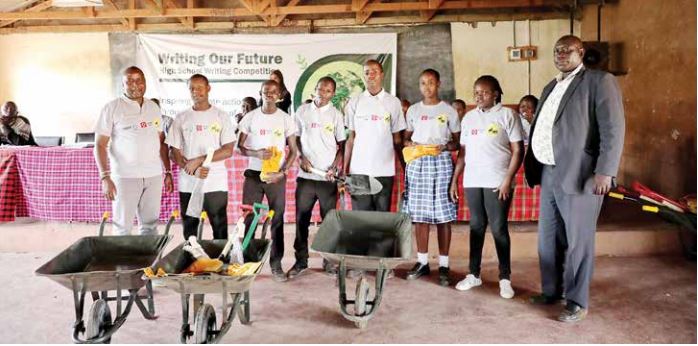
Youth and women in northern Kenya are increasingly turning to skills training and small enterprises as a response to climate pressures and shrinking traditional livelihoods, as the Northern Rangelands Trust (NRT) scales up its Mashinani WORKS programme to build economic resilience across conservancies.
The shift is captured in the NRT 2025 Annual Report, which shows a growing emphasis on vocational training, entrepreneurship, and financial literacy as communities adapt to recurrent droughts and limited reliance on pastoralism. The programme is being implemented across arid and semi-arid landscapes where livelihoods have long depended on rainfall and livestock.
According to the report, 505 women and youth were trained in life skills, entrepreneurship, and financial literacy in 2025. The interventions are aimed at equipping beneficiaries with practical tools to start and manage income-generating activities in increasingly unpredictable climatic conditions.
In addition, 157 young people were enrolled in vocational training under the Ujuzi Manyattani programme, with 20 advancing to higher-level skills development. The training focuses on practical trades including mechanics, construction, tailoring, and small enterprise development, offering alternatives to traditional livestock-based livelihoods.
The programme has also expanded women’s participation in the rural economy through community-based enterprises. BeadWORKS initiatives generated KES 19.1 million in 2025, providing direct income while sustaining local craft production. The earnings have strengthened household economies and expanded women’s role in community decision-making.
NRT says the economic interventions are deliberately linked with conservation and environmental programmes, including rangeland restoration and water infrastructure development, to ensure that livelihood expansion does not undermine natural resources.
Improved grazing systems and better access to water have supported the growth of small-scale enterprises, with more households engaging in trade and service-based activities alongside livestock keeping.
The report highlights that youth remain central to the programme, given the region’s growing young population and limited formal employment opportunities. The focus on skills development is intended to reduce vulnerability and prevent long-term economic exclusion.
However, NRT notes that 2025 was also marked by financial constraints and shifting donor support, which required prioritisation of scalable and high-impact interventions across conservancies.
Looking ahead, the organisation says it plans to expand vocational training, strengthen market access for community enterprises, and build stronger value chains to improve income generation. It also points to the need for increased investment into community-led enterprises to sustain growth.
Through Mashinani WORKS, NRT is positioning skills and enterprise development as a central pillar of climate adaptation in northern Kenya, as communities gradually shift from reliance on climate-sensitive livelihoods to more diversified and resilient economic pathways.



Comments (0)
No comments yet. Be the first to comment!