

-
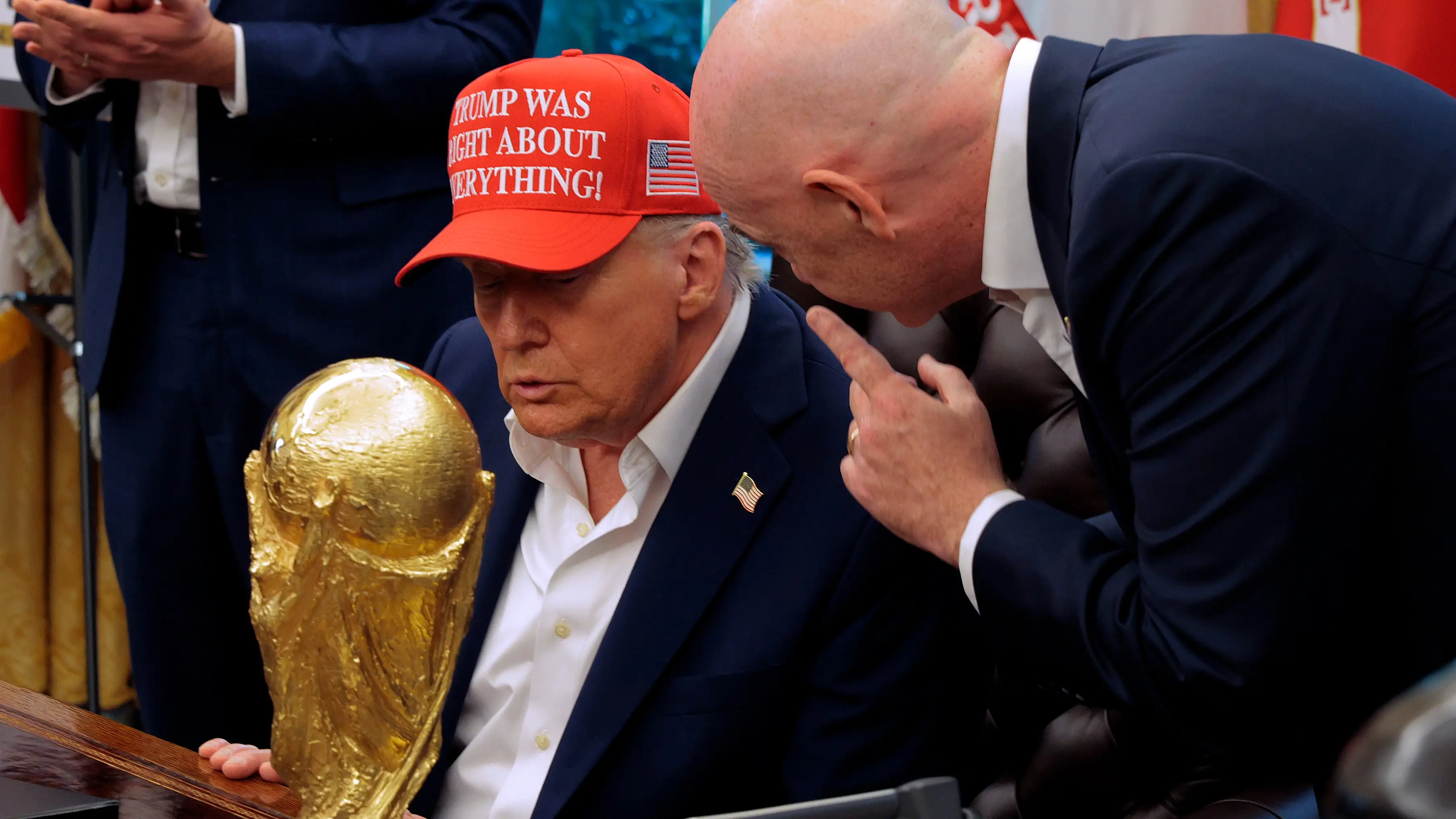 TRUMP SKIPS WORLD CUP SPOTLIGHT
-
Martha Karua Denied Entry Into Uganda Amid Growing Concerns Over Opposition Legal Cases
-
Justice Gatembu Kairu Elected New President of the Court of Appeal
-
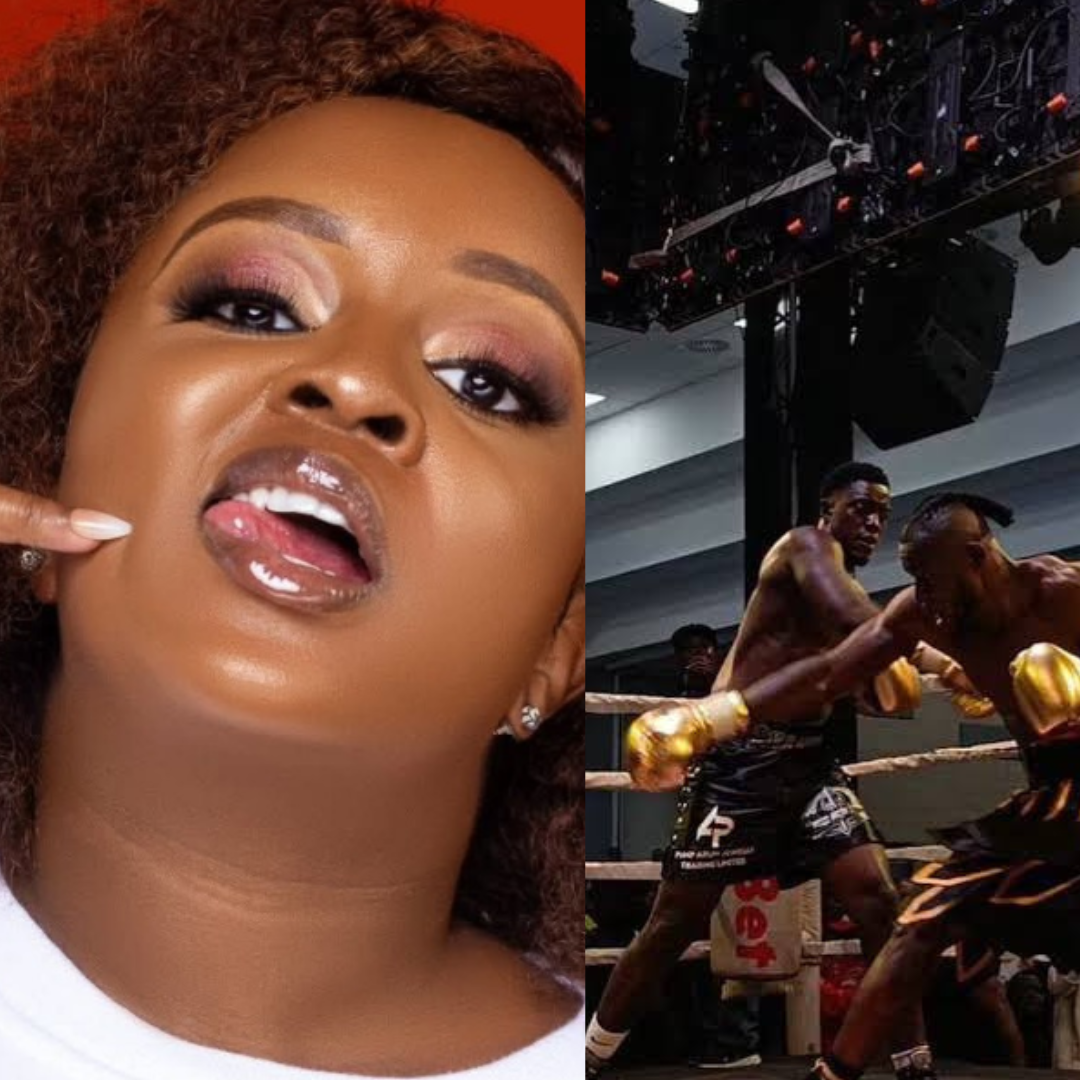 NADIA FIRES BACK AT TROLLS OVER ARROW BWOY'S RING DEFEAT
-
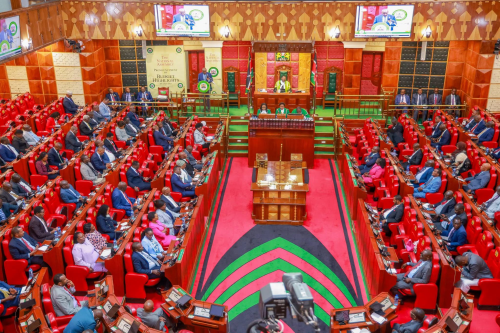 FINANCE BILL 2026 SAILS THROUGH AS 55% OF MPs SNUB VOTE.
-
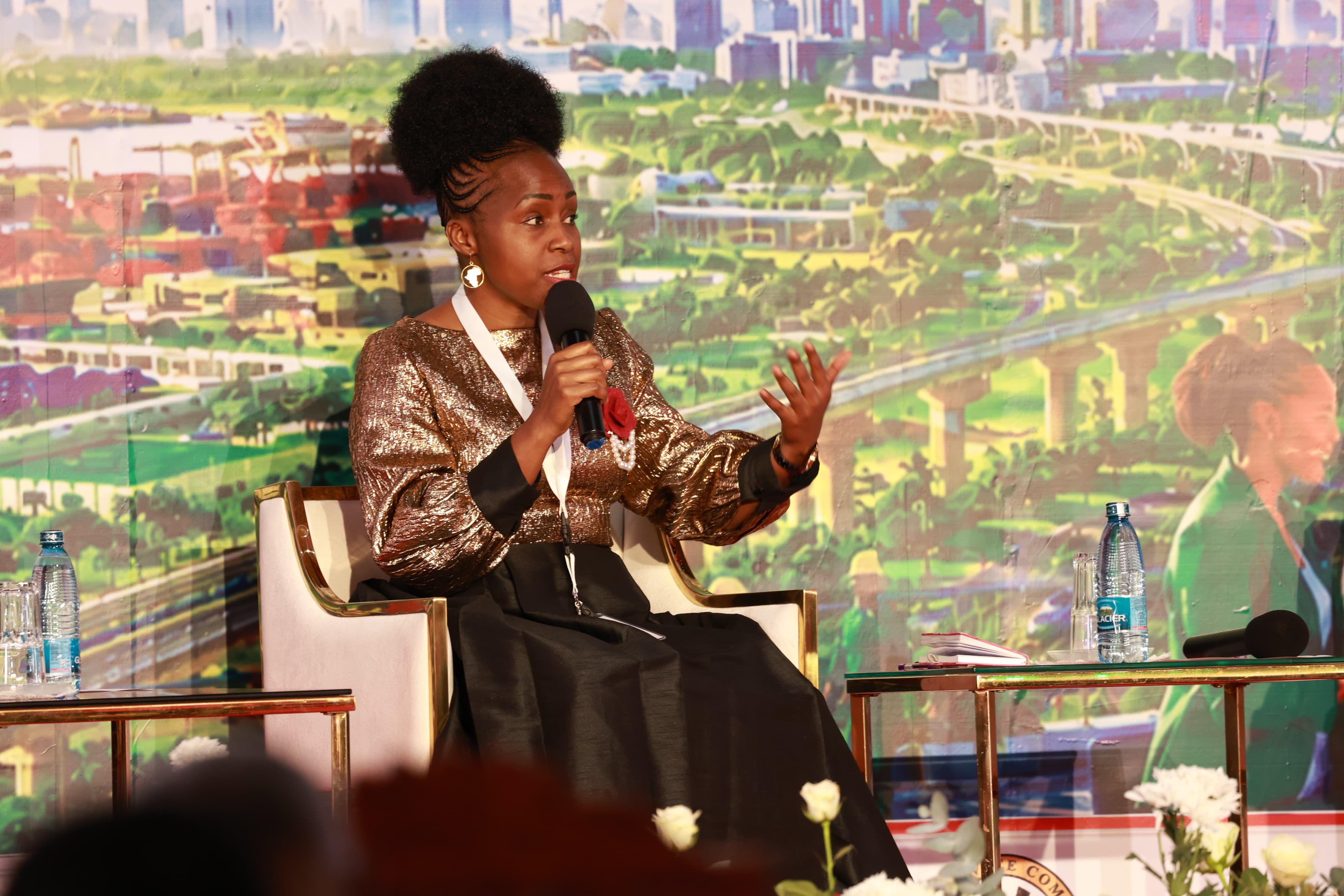 Emerging Leaders Foundation Calls for Performance-Based Public Service Reforms at National Productivity Conference
-
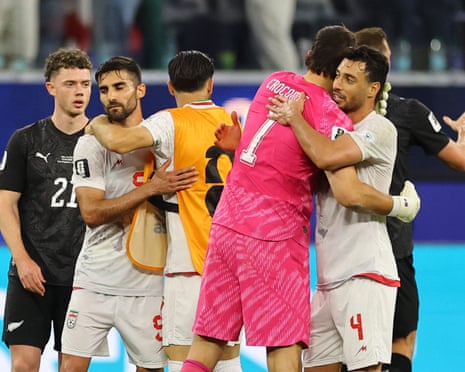 IRANIAN TEAM LAMENTS 'OPPRESSION' AFTER US EXIT ORDER AMID WORLD CUP
-
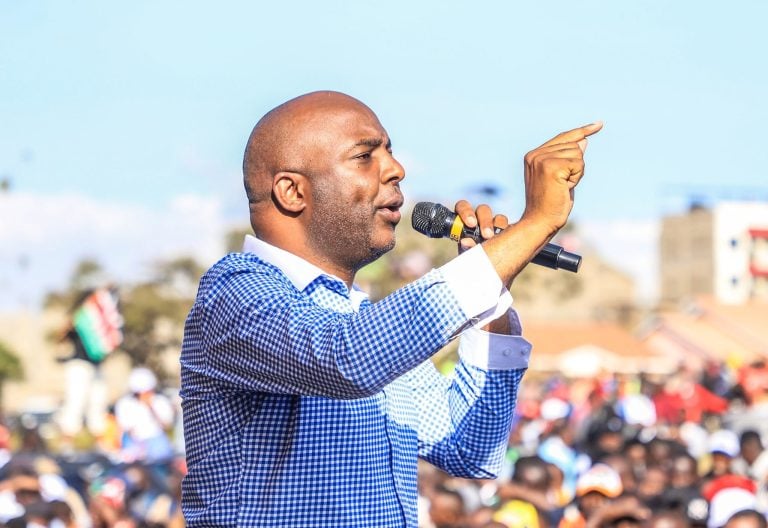 KANG'ATA TURNS GUNS ON RUTO AT LINDA MWANANCHI RALLY
-
 GRIEF AT UTUMISHI GIRL'S REQUIEM MASS
POLITICAL JOURNEY FOR RAILA AMOLO ODINGA

Kenya is in mourning; a son of the land who is gallant and decorated is no more. The death of Raila Odinga has hit us so badly.
In his political strongholds in the nation, his die-hards were shattered. Death, they said, had dealt them a dirty blow. Some walked town centers making noise with horns and wielding twigs to console themselves, while others wrote dirges, mourning the cruel destiny of the grim ripper which has robbed them of the firm hand, the greatest leader, who led by example.
Raila's death was a shock to his supporters as his close friends and relatives have been keen to drive away any news of Raila being critically ill after he went out of the country over a week ago, indeed death has proved to be a sly thief.
As news of Raila's critical illness began to spread around the first week of October, when he departed from the country, his closest supporters downplayed it. His brother Senator Oburu Odinga said he was ill but receiving treatment in India and would be coming back home soon.
It was thus a great shock, therefore, that news emerged today that Kenya's ex-Premier and legendary opposition politician, Raila Odinga is, in actual fact, dead. He allegedly succumbed to cardiac arrest during an early morning stroll in Kochi, India.
Raila collapsed while on a morning walk at Ayurvedic eye hospital-cum-research center in Kerala, and he was thereafter admitted to Devamatha Hospital in Kerala, southern India. He was pronounced dead at 9 am on October 15, 2025. He was 80 years old.
Raila was receiving medical attention in the hospital for the last five days with his daughter Winnie Odinga and his doctor. The Kenyan delegation that had travelled to fetch his body back home to Nairobi arrives on Thursday morning, while his burial is scheduled for Sunday, the October 19, 2025 at his Opoda Farm in Bondo, Siaya County.
RAILA'S YEARS
Raila Amolo Odinga was born in 1945 to the late leader of Kenyan opposition politics, Jaramogi Ajuma Oginga Odinga and the late Mary Juma Odinga. Raila's father Jaramogi, also referred to as the doyen of Kenya's opposition politics, was a freedom fighter and Kenya's first Vice-President serving under Jomo Kenyatta.
He later fell out with Jomo Kenyatta and remained the opposition leader for decades until his death in 1994. Jaramogi, was a major source of political influence to Raila's career, and was indeed the brains behind Raila's political success.
Raila began his primary education at Kisumu Union Primary, and subsequently went to Maranda High School for his secondary education. He traveled to then East Germany in 1962 to study at the Herder Institute. Raila won a scholarship at the Faculty of Technical School in Magdeburg in 1965, in the University of Leipzig in East Germany.
He then later acquired a Master of Science in Mechanical Engineering in 1970. Raila desired to increase his technical capabilities, and he attended short courses in the National Bureau of Standards in Washington, D.C., British Standards Institution, and University of Denver, all on standardization and quality control.
When he returned to Kenya in 1970, Raila got a position of lecturing at the University of Nairobi, school of Engineering as an assistant lecturer between 1970 and 1974.
He subsequently established two local firms by the names, Franz Schineis and Partners and the Standard Processing Equipment Construction and Erection Limited, which was subsequently renamed to the East African Spectre, a company that specializes in dealing with the manufacture of liquid petroleum gas cylinders. The company is currently owned and run by his family.
PUBLIC LIFE
In 1974, Raila left the classroom for a job in the Kenya Bureau of Standards (KEBS) where he was rapidly promoted to the position of the Group Standards Manager and later became the position of Deputy Director in 1978. Raila remained in this position until 1982 when he was held without trial for his perceived political gains.
In 1982 Raila, through a case of accidental falling into public glare, after the 1982 attempted coup against the military, the government of Daniel Arap Moi detained him and a few other lecturers at University, and his father Jaramogi was placed under house arrest for 7 months.
He was later charged with treason, but was thereafter summarily detained without trial for six years during which time he lost his mother. Moi’s government ordered him released in February 1988 but was arrested afresh in September 1988 and detained again.
For the second time, Raila was released in June 1989, behind bars in detention for the third time in July 1990. He was detained with Kenneth Matiba and Charles Rubia, multi-party crusaders who had begun the campaign for multi-party democracy after they had fallen out with then-President Moi. Raila was released again in June 1991, and later he fled to Norway to avoid further arrests.
ELECTED MP
Raila quietly returned to Kenya in February 1992, and joined a political movement fronted by his father Jaramogi, the “Forum for the Restoration of Democracy” (FORD). FORD, which later morphed into a political party, was instrumental in forcing Moi’s government to open up the democratic space in Kenya and most crucially, force parliament to legislate a law, that would eventually allow multi-party democracy and eventually elections.
Raila was appointed FORD's vice-chairman, General Purposes Committee. In 1993, wrangling and interests clash resulted in the breakup of the original FORD Party into two factions, FORD and FORD-Kenya parties. During the 1992 general elections, Raila contested against Philip Leakey on a Ford Kenya party ticket for the Langata Constituency seat and won with a landslide victory.
When his father, Jaramogi Oginga Odinga, died in January 1994 at the age of 82 years, Raila chose to run against Michael Kijana Wamalwa for chairmanship of the party and lost. Within a few weeks, he left FORD-Kenya party, resigned from his parliamentary seat and joined the National Development Party (NDP).
He would later contest the Langata Constituency seat again through a by-election and emerged victorious once more. A seasoned bona-fide politician at this point, Raila's star shone brighter when he took on his fatherly role, with it came a strong grip on Luo-Nyanza and beyond.
Raila, unlike his father Jaramogi, never held an elective seat in Luo-Nyanza in his entire political life, despite it being his political stronghold. Raila the politician made of the same cement as the late Jaramogi.
Ideological and charismatic, his popularity would soon extend beyond Luo-Nyanza as he extended and embraced political connections from Nyanza, Rift-Valley, Western, Nairobi and Coast provinces. He was bound to go far, to the level of the presidency.
RAILA RUNS FOR PRESIDENCY FOR THE VERY FIRST TIME
As sure as the sun would rise in the east, Raila stood for the presidency in 1997 on the National Development Party (NDP) and came in third. NDP employed the tractor as its symbol and that soon had Raila being addressed as "Tinga". But despite defeat, he retained his seat in Langata Constituency.
A shrewd strategist, soon after, he stunned his followers by warming up to his erstwhile opponent, Moi, and what would soon follow astonished Kenyans. Raila teamed up with Moi and triggered a merger between his party, the NDP, and Moi’s KANU.
Raila went on to serve in Moi’s cabinet as the energy minister from 2001 to 2002. In the subsequent internal KANU elections, Raila garnered the enviable position of the party’s Secretary-General, which was part of their pact during his party’s merger with KANU.
However, things would turn dramatic in 2002, when Raila had a showdown with Daniel Moi within KANU after the latter went public to endorse Uhuru Kenyatta, regarded as a political new-comer, as his preferred successor.
Raila Odinga, teamed up with other notable KANU members, such the late George Saitoti, current Wiper Party leader, Kalonzo Musyoka, and the late Joseph Kamotho, to oppose and protest Moi’s preference for the then 38-year-old Uhuru Kenyatta, who was disparaged for not having contested or won a single political seat in the country.
The self-declared KANU rebels almost imploded the wobbling independence party as they ejected from the party in a huff when Moi stuck to his guns. As Moi’s rule drew to an end, the stakes were set so high, the country sat on edge as the 2002 general elections drew nigh. Would Moi be defied? It would be for the first time.
specific tallying stations recorded almost perfect voter turnout which handed Kibaki the victory.
When the chairman of the electoral body, Samuel Kivuitu, finally announced Kibaki’s win and a hurried night-time swearing in, it became the straw that broke the camel’s back. Kibaki’s team chest-thumped their victory and dared Raila’s party to protest. Raila's camp called their bluff, bitterly contesting the presidential election and supporters on both sides unleashing deadliest-ever, post-election violence. It murdered hundreds of Kenyans as others in their thousands were compelled to flee, in and out of the country. It was through the intervention of foreign actors that the two parties were lured to the negotiating table. The late Kofi Annan presided over the negotiation negotiations which saw Raila join the government as the Prime Minister, together with his delegation that included current President William Ruto, and Wycliffe Mudavadi.
The cobbled government forcefully was locally referred to as the "nusu-mkate" government since both sides tended to argue that they deserved a "half-loaf" of the government. The Kibaki government continued to come up with both the constitution of Kenya 2010 led by Raila and later the first general election based on the Constitution of Kenya 2010 in 2013.
It was during this term that Raila defected from William Ruto and Musalia Mudavadi who defected to Uhuru while Kalonzo Musyoka, among others, defected to Raila Odinga under the Coalition for Reforms and Democracy (CORD).
RAILA TWO-TIME BATTLE WITH UHURU
Mwai Kibaki, having served his second term, was disqualified from running in 2013 but as he slipped into retirement, continued to secretly support Uhuru Kenyatta against Raila Odinga. IEBC declared that Raila lost the 2013 presidential election when he ran against Uhuru Kenyatta. Raila Odinga, in protest, alleged widespread fraud and went to the Supreme Court with the "tainted election" results.
The Supreme Court threw out his case and Raila cried foul of The Supreme Court, led by Chief Justice Willie Mutunga, which sanctioned The National Alliance (TNA) coalition win. The victor duo of Kenyatta and Ruto were, on the other hand, to face trial at the International Criminal Court (ICC) for the violence following the 2007 polls. Following a series of court sessions, they were eventually acquitted of the offenses at the ICC, in The Hague, Netherlands.
In 2017, Raila made a second run against the Uhuru-Ruto Jubilee Party. Jubilee Party was declared victors by the Independent Electoral and Boundaries Commission (IEBC), but this was swiftly revoked by the Supreme Court when Raila's National Super Alliance (NASA) opposition promptly filed a successful petition at the Supreme Court to overturn the outcome of the polls.
Raila's NASA boycotted the rerun election on October 2017 creating room for Kenyatta to emerge victorious during the repeat elections that had the lowest votes ever in Kenya's elections.
Uhuru and Raila, speaking in secret, soon reconciled and were soon involved in the Building Bridges Initiative (BBI) project whose purpose was to revisit the constitution among other topics. But never came to pass as the Supreme Court of Kenya struck it down quoting that it was illegal, irregular and unconstitutional.
RAILA LOSES TO RUTO IN 2022
Ever constant, Raila ran for president for the fifth time, a Kenyan record, in August 2022 but lost to former Deputy President William Ruto who, according to IEBC, garnered 50.49 percent of the votes against Raila Odinga's 48.85 percent.
Raila, far from giving up, challenged the result in the Supreme Court to no success. The court said it did not establish any hacking and that no proof was produced to demonstrate that IEBC chairman, the late Wafula Chebukati, and other IEBC personnel were involved in election cheating.
Raila dissented but supported the court decision. He, however, speedily organized a robust resistance against President Ruto's Kenya Kwanza government's excesses and follies. He opposed the high cost of living and corruption that he felt was at the core of the government and certainly his was the inspiration that ignited the Gen-Z protests in 2024 after his opposition-led protests in 2023.
At the height of the Gen-Z protests, President Ruto extended an olive branch to Raila and he agreed to collaborate with him under the rubric of the wide-based government that he had supported up to his demise.
A perspicacious Pan-Africanist, at the beginning of 2025 Raila Odinga's bid for African Union Commission (AUC) chairpersonship disintegrated when he couldn't muster the essential two-thirds majority to wrest the coveted seat. He was defeated by Djibouti Foreign Affairs Minister Mahamoud Ali Youssouf.
It is to perish as human being, but Raila's demise was not one one wanted to talk about unless death happened. African elders are hallowed, to speak about their demise is hymn and would trigger an eyebrow but the cruel reality of life is… human beings all die; some early others late.
October 15, 2025, was the day Raila had to step out of the limelight but oh no! What a life-odyssey he had! Somehow right from his first detention, his life-odyssey, his political realignments and alignments have always influenced the nation.
Raila married Ida Oyoo Odinga and the two had 4 children. He remained a family man, busy fully, with lots of laughter and motivation to the family that always looked up to him.
Raila, a five-time presidential candidate, is credited with opening up the democratic space in Kenya. Jakom (chairman) is credited with birthing the Constitution of Kenya 2010.
He is also referred to as the Father of Devolution. Mysterious and charismatic, he was a walking paradox, why did he accomplish so much in one life? Raila was also known by others as Tinga in the 90's, to some as Agwambo (the Enigma), but to others as Baba (Father).
The courageous son of Sakwa, Bondo has made the final curtain call… when an elephant tumbles, monkeys cry. "Vēnit, vīdit, vīcit". He came, he saw, he won! Jowi! Jowi! Jowi! May his soul rest in peace forever.

Comments (0)
No comments yet. Be the first to comment!