

-
 RONALDO AND GEORGINA FLAUNT WEDDING RINGS
-
 DIAMOND’S FORMER DJ RESCUED FROM STREETS
-
 MUTURI REJECTS GACHAGUA’S ‘HYENA COALITION’
-
 YUNGE’S ALLEGED EX CRIES FOUL AFTER CHARLENE’S WEDDING
-
 GACHAGUA PROPOSES 'THE HYENA COALITION '
-
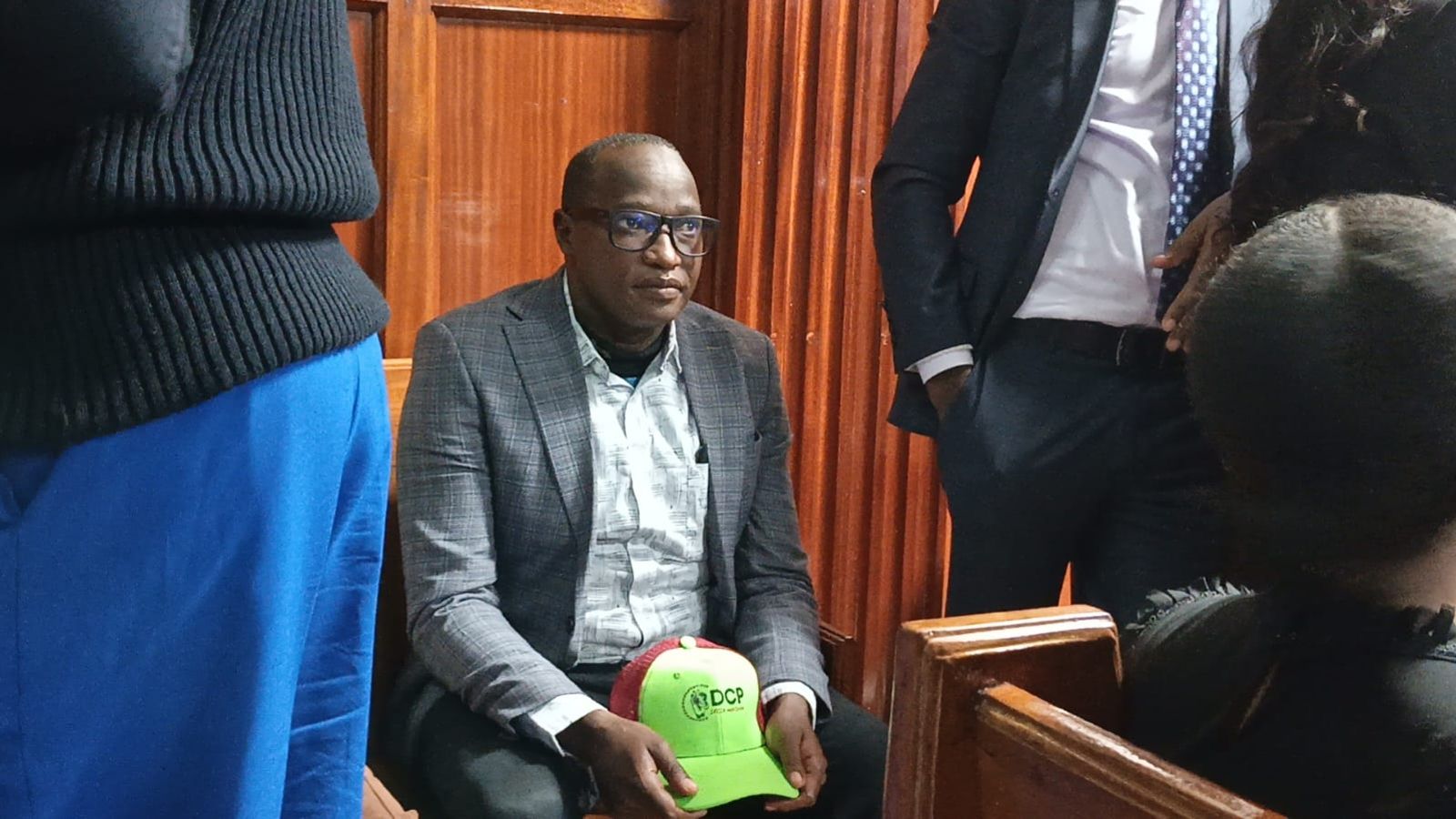 MP KAGUCHIA PLEADS NOT GUILTY TO INCITEMENT CHARGE
-
 DIAMOND, ZUCHU WELCOME BABY GIRL
-
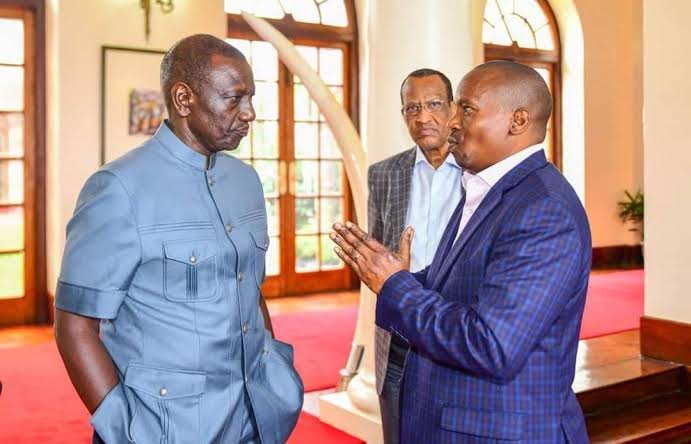 KINDIKI IN TROUBLE ?
-
 KANG'ATA JOINS GACHAGUA'S DCP
CAMEROON IN LIMBO AS PRESIDENT BIYA GOES INTO POLITICAL EXILE

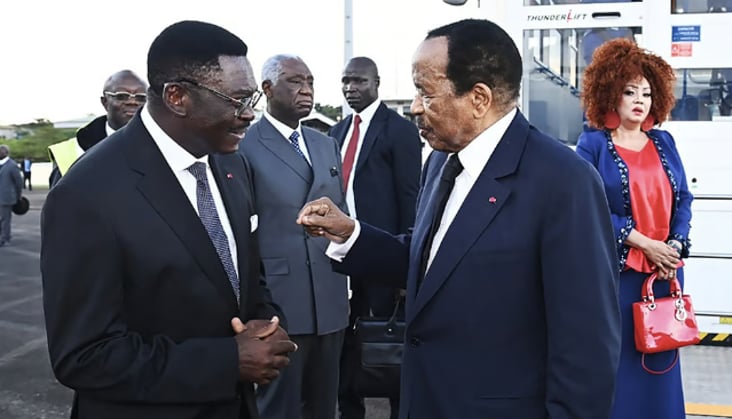
As Cameroon inches closer to its pivotal October 2025 presidential election, mounting uncertainty surrounds the man who has led the nation for over four decades ( from 1982) — President Paul Biya, going into months of political oblivion.
In his place, an increasingly assertive figure has taken centre stage: Ferdinand Ngoh Ngoh, the Secretary-General at the Presidency, whose growing influence has sparked both intrigue and unease within the ruling establishment.
President Biya, now 92, doubling as the world's oldest president, has remained conspicuously silent in recent months, fuelling speculation about his health and political intentions. Since a surprise leadership reshuffle within the Cameroon People's Democratic Movement (CPDM) in March, Biya has retreated from public view, prompting questions about who is truly in charge.
In his absence, Ngoh Ngoh has stepped into the political spotlight, unveiling an unofficial but potent campaign arm — the Strategic Committee for Paul Biya’s Campaign — on July 1. Though the body lacks formal government recognition, it has begun operating with unprecedented vigour, coordinating activities traditionally handled by the party’s official machinery.
The committee's formation came just days after two former Biya allies — Issa Tchiroma Bakary and Bello Bouba Maïgari — declared their presidential bids, effectively severing ties with the CPDM. Their announcements sent shockwaves through the political landscape, exposing rifts within the ruling coalition and prompting Ngoh Ngoh to launch a rapid, nationwide tour to contain the fallout.
Meeting party officials and regional leaders across all ten regions, Ngoh Ngoh sought to re-establish Biya's authority and calm fears of internal collapse. In the North, he downplayed the defectors’ influence, portraying their rise as a byproduct of CPDM's own strength.
In Adamawa, demands for infrastructure, visibility, and tangible government presence dominated discussions — and Ngoh Ngoh pledged these issues would feature prominently in Biya’s yet-to-be-confirmed campaign manifesto.
However ,the elephant in the room remains: Where is Paul Biya? Since March, the president has not made a single public appearance or statement. While Ngoh Ngoh has taken over campaign coordination, Biya has neither confirmed his candidacy nor convened the CPDM’s political bureau to initiate the nomination process.
Insiders now hint that Biya may bypass party structures altogether, planning instead to release an open letter to the nation — doubling as both a public reemergence and an official declaration of his candidacy. Under CPDM’s founding rules, such a move would be legally sound, as Biya remains its automatic standard-bearer. But politically, it raises deeper concerns about accountability, legitimacy, and internal democracy.
The silence from above has emboldened internal critics. Léon Theiller Onana, a CPDM official from the Centre Region, has publicly called for a long-overdue party congress to select a nominee — something not held since 2011. When his calls went unanswered, he took legal action and declared his own presidential run under the CPDM banner.
Though his efforts to force primaries have so far failed, they’ve exposed growing discontent within party ranks, especially among younger members who are frustrated with the lack of transparency and generational renewal.
Ngoh Ngoh’s commanding role in shaping campaign strategy — including holding key meetings at the Unity Palace rather than party offices — has led some observers to conclude that a de facto transfer of power is underway. His influence, once seen as merely administrative, is now interpreted by some in the ruling elite as a subtle but firm consolidation of control.
Critics warn that this centralization risks sidelining party institutions and eroding democratic norms. Meanwhile, the opposition is capitalizing on the confusion, framing the current situation as evidence that Cameroon is being ruled by proxy.
As the October election approaches, Cameroon finds itself at a political crossroads. With Paul Biya silent and Ferdinand Ngoh Ngoh steering the campaign apparatus, uncertainty looms over the legitimacy of the upcoming vote, the unity of the CPDM, and the future leadership of the country.
Whether Biya eventually steps forward or continues to rule from behind the curtain, the 2025 election may mark not just the end of a political era — but the beginning of a contested and turbulent transition.
Comments (0)
No comments yet. Be the first to comment!