

-
 RUTO, SIFUNA DRAW IN 2027 PRESIDENTIAL POLL
-
 CARRICK PAYS PRICE FOR UNITED CRISIS
-
 MARIGA CHALLENGES FKF OUSTER, VOWS TO FIGHT ON
-
 DANCEHALL ROCKS KANYARI'S CHURCH
-
 GACHAGUA DISMISSES RUTO'S GUSII TOUR AS POLITICAL STUNT
-
 RUTO YIELDS TO ODM POWER DEMANDS
-
 THE LAST SIUUU! RONALDO RETIRES FROM PORTUGAL
-
 HUDDAH RULES OUT KENYAN MEN
-
 TRUMP CONCEDES TO MIDTERM BLUE WAVE
RUTO, SIFUNA DRAW IN 2027 PRESIDENTIAL POLL
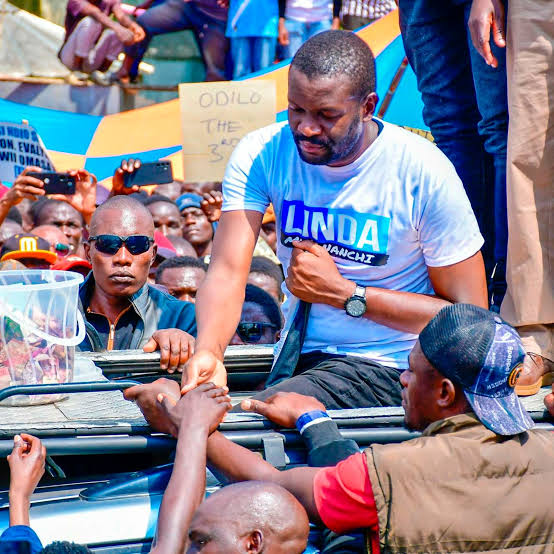
President William Ruto and Nairobi Senator Edwin Sifuna have emerged as joint frontrunners in the race for the 2027 presidential election, following a new opinion poll that places both leaders at 31 per cent.
The survey, released on Thursday, November 12, 2026, by Trends Insight for Africa (TIFA), points to a significant shift in Kenya's political landscape, with Sifuna registering a remarkable rise in popularity despite leading a relatively new political movement.
The findings place Wiper Party leader Kalonzo Musyoka in third position with nine per cent, followed by former Interior Cabinet Secretary Fred Matiang’i at five per cent and former Deputy President Rigathi Gachagua at four per cent.
Kiharu MP Ndindi Nyoro registered one per cent, while 15 per cent of respondents remained undecided. Another four per cent declined to give their preferred candidate.
The poll was conducted between October 26 and November 5 through face-to-face household interviews involving 2,036 respondents drawn from nine regions across the country. It has a margin of error of plus or minus 2.16 percentage points, although the margin is higher for smaller sub-groups.
Sifuna's performance represents one of the most significant developments in the latest findings, considering that he had not registered measurable national support in TIFA's earlier surveys up to November 2025.
His rating subsequently rose to 10 per cent in May 2026, increased to 15 per cent in June and eventually reached 31 per cent in the latest survey.
Ruto, on the other hand, has recorded a steadier improvement, moving from 24 per cent in May and June 2026 to 31 per cent in November.
The latest figures also reveal declining fortunes for some of the established opposition figures who previously featured prominently in presidential preference rankings.
Matiang’i, who had previously recorded 32 per cent in August 2022 and 14 per cent in May and June 2026, dropped to five per cent. Kalonzo's support similarly declined from a high of 25 per cent in November 2025 to nine per cent in the latest findings.
Gachagua, who registered nine per cent in May 2026, also experienced a decline, falling to four per cent.
The poll comes against the backdrop of Sifuna's political fallout with ODM following disagreements over the party's cooperation with President Ruto's administration.
The Nairobi senator, who served as ODM Secretary-General for eight years, became increasingly critical of the broad-based government arrangement, particularly its approach to taxation, the rising cost of living and governance.
His disagreements with the party leadership intensified following the death of former ODM leader Raila Odinga in October 2025. ODM subsequently moved to remove him from the Secretary-General position in February 2026, with the changes later ratified by the Office of the Registrar of Political Parties.
Sifuna subsequently shifted his political focus towards building a new political vehicle, adopting The Equitable Party (TEP), which was unveiled on October 4, 2026.
The outfit was later rebranded as the Linda Mwananchi Movement, with Sifuna emerging as its leader and presidential flagbearer.
The movement has positioned itself around protecting ordinary Kenyans from what it describes as excessive taxation, economic hardship and political arrangements that exclude citizens from decision-making.
Its emergence has also created fresh dynamics within the opposition, particularly as other established political figures seek to consolidate their support ahead of the 2027 elections.
On September 27, 2026, Linda Mwananchi principals endorsed Sifuna as their leader and presidential candidate, signalling their intention to build a coalition with like-minded political parties.
The movement has also attracted attention from several political figures, with Trans Nzoia Governor George Natembeya reportedly taking up a proposed leadership role in Sifuna's presidential campaign, while Vihiga Senator Godfrey Osotsi has been proposed for the party chairmanship.
However, the movement faces the challenge of establishing nationwide political structures and bringing together opposition figures pursuing different political interests.
The TIFA findings further reveal contrasting regional support patterns between the two leading presidential hopefuls.
Sifuna recorded 32 per cent in the Mt Kenya region and 31 per cent in the South Rift, indicating growing support beyond his political base in Western Kenya and Nairobi.
Ruto, meanwhile, maintained strong numbers in North Eastern, where he recorded 62 per cent, and Central Rift at 59 per cent.
The President also registered 40 per cent at the Coast and 35 per cent in Nyanza.
On political party popularity, the United Democratic Alliance (UDA) emerged as the leading party nationally with 25 per cent.
Linda Mwananchi followed with 17 per cent, placing it ahead of ODM, which registered 10 per cent.
The figures provide an early indication of the movement's growing national visibility, although its ability to translate popularity into an effective grassroots political network remains a significant test.
The TIFA findings come weeks after other research firms released their own assessments of the presidential contest.
A Research 8020 survey published on October 23 placed Ruto at 26 per cent and Sifuna at 25 per cent, with Kalonzo at 11 per cent and Matiang’i at nine per cent.
Politrack Research, in a survey conducted between September 15 and 25, gave Ruto a considerably higher rating of 45.1 per cent, while Sifuna registered 19.6 per cent.
Kalonzo followed at 10.3 per cent, Matiang’i at 7.2 per cent and Gachagua at six per cent.
The differing figures highlight the variations in voter preferences captured by different polling organisations and survey periods.
Nevertheless, TIFA cautioned that its findings reflect the opinions of respondents at the time of the interviews and should not be interpreted as a prediction of the eventual election outcome.
With the August 2027 General Election approaching, political alliances, campaign strategies, party structures and the eventual selection of candidates are likely to influence how the contest unfolds.

Comments (0)
No comments yet. Be the first to comment!