

-
 BURUNDI SIGNALS TIT- FOR- TAT RESPONSE OVER RUTO FOREIGNER CRACKDOWN
-
 TANZANIA MOURNS DEATH OF PRESIDENT SAMIA’S HUSBAND
-
 TIKTOKER OMOLLO DIES AFTER ROBERRY AMBUSH AMID SHOOT
-
 MT KENYA KNOCKS ON OBURU’S DOOR
-
 TUPAC FINALLY GETS JUSTICE AS KILLER FOUND GUILTY
-
 THREE DAYS TO ACT OR WE DUMP RUTO — WAMUCHOMBA
-
 WE NEED YOU ALIVE ; MIGUNA WARNS GACHAGUA, WIFE OVER RISKY BOAT RIDE
-
 STOOPID BOY’S BURIAL WISH SPARKS FAMILY STANDOFF
-
 SAKAJA DELIVERS ON CHAPATI MACHINE PROMISE
BURUNDI SIGNALS TIT- FOR- TAT RESPONSE OVER RUTO FOREIGNER CRACKDOWN
Burundi has issued a stern warning to Kenya over the treatment of its citizens following President William Ruto’s directive targeting foreign nationals engaged in small-scale trade and hawking.
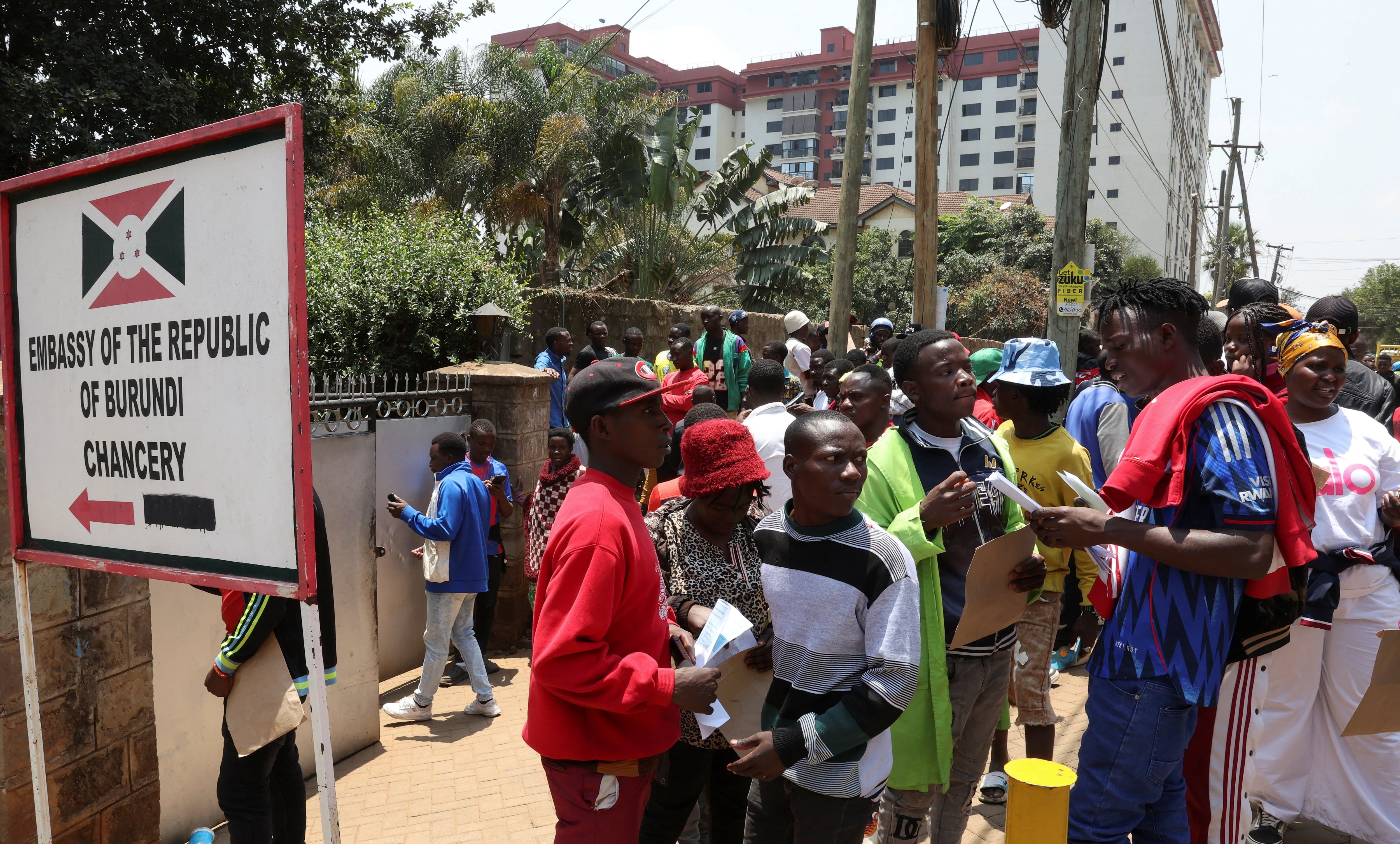
The diplomatic dispute intensified on Monday, September 7, as hundreds of Burundians gathered outside their embassy in Nairobi seeking emergency travel documents amid fears that the government crackdown could disrupt their livelihoods.
Burundi’s Foreign Affairs Minister Édouard Bizimana cautioned that continued hostile rhetoric against Burundians could have consequences for relations between the two countries.
In a message posted on X, Bizimana said Kenyans living in Burundi had continued to live peacefully but warned that the situation could change if what he described as hate speech against Burundians persisted.
He also stressed that the Kenyan government had a responsibility to protect Burundian nationals living within its borders.
The warning came after President Ruto ordered the closure of small businesses operated by foreign nationals, particularly in areas such as hawking and small-scale retail. The President said such activities should primarily provide opportunities for Kenyan citizens, while foreign investors should concentrate on ventures that bring capital, create jobs and expand local industries.
The directive followed complaints from Kenyan traders who have accused foreign operators of taking over businesses traditionally associated with local entrepreneurs.
The announcement has since created anxiety among some Burundians living and working in Kenya.
At the Burundian Embassy in Nairobi, crowds of nationals arrived carrying luggage and personal belongings as they sought travel documents to facilitate their return home.
Some said they were leaving reluctantly after receiving threats or fearing that their businesses could be affected by the enforcement campaign.
Reuters reported that hundreds had gathered at the embassy, with some saying they had been forced to consider returning to Burundi despite having lived in Kenya for years.
Burundi has moved to assist its nationals by providing emergency laissez-passer documents, while arrangements have reportedly been made to facilitate their journey back home.
The United Nations refugee agency estimates that roughly 16,000 Burundian refugees and asylum seekers are in Kenya. A section of this population relies on informal and small-scale businesses for their livelihoods.
Kenyan authorities have however sought to distinguish between undocumented foreign traders and foreigners legally authorized to work or operate businesses.
Trade Cabinet Secretary Lee Kinyanjui said visa-free entry and exemption from Electronic Travel Authorisation requirements do not automatically give visitors permission to work, trade or run businesses in Kenya.
The government says enforcement is aimed at foreign nationals who enter the country as tourists, visitors or investors and subsequently engage in business activities without the necessary permits and licences.
Foreign Affairs Principal Secretary Korir Sing’oei has similarly maintained that foreigners who possess valid work permits and business licences remain protected under Kenyan law.
The government has also linked the crackdown to the proposed Local Content Bill, 2025, which is still before Parliament and seeks to strengthen local participation in economic activities.
The dispute is increasingly moving beyond immigration and business enforcement into the diplomatic arena.
Bizimana has reportedly engaged Kenya’s ambassador in Burundi and called for assurances that Burundian citizens in Kenya will not face harassment, violence or unlawful eviction.
Burundian lawmakers have also questioned whether Nairobi’s actions could warrant reciprocal measures against Kenyans working and operating businesses in Burundi.
Such retaliation has not been formally announced by the Burundian government, but the debate highlights the potential economic consequences if the disagreement escalates.
Burundi has also called for regional engagement, urging Ugandan President Yoweri Museveni, who currently chairs the East African Community (EAC), to intervene, arguing that the treatment of traders from EAC member states should be addressed within the framework of the EAC Common Market Protocol, which provides for the free movement of people, goods, services and labour across the region.
The EAC framework is intended to facilitate the movement of people, goods, labour and services among member states, making the dispute particularly sensitive.
President Ruto’s policy has attracted criticism from opposition politicians, civil society groups and Pan-African activists, who argue that foreign traders should not be blamed for Kenya’s wider economic problems.
Opposition leaders have pointed instead to high taxes, inflation, unemployment, corruption and the difficult operating environment facing small businesses.
Critics have also warned that political rhetoric surrounding foreign traders could fuel hostility against African migrants and damage Kenya’s regional relationships ahead of the 2027 General Election.
Activists have called for calm and urged Kenyans not to take the law into their own hands, warning that tensions could fuel accusations of xenophobia. They have also cautioned that the dispute could expose Kenya to comparisons with South Africa, where immigration and the treatment of fellow Africans have repeatedly sparked controversy and regional concern.
The government, meanwhile, has maintained that its objective is to protect opportunities for Kenyan traders rather than shut Kenya’s doors to foreign investment.
The immediate concern is now how Kenya will enforce the directive without turning a domestic economic policy into a broader regional dispute.
The sight of Burundians queuing outside their embassy in Nairobi has already underscored the human impact of the new policy.
For now, Burundi’s warning signals a serious diplomatic tension rather than a declaration of retaliation. But if tensions continue to rise, the disagreement could test both countries’ bilateral relations and the wider East African Community commitment to regional economic integration.


Comments (0)
No comments yet. Be the first to comment!